OCR REST API
Using command line
Process image: specify an appropriate file location (
FILENAME) and OCR parameters to theprocessImageAPI call.curl -s --form "file=@FILENAME" "http://ocr.hostname:8080/api/v2/cloud/processImage?xml:writeRecognitionVariants=false&profile=documentConversion&exportFormat=txt&language=English&correctOrientation=true"Output: copy the task ID to execute the next command.
<?xml version="1.0" encoding="UTF-8" standalone="yes"?><response><task id="5693d8f77b78005fcbbfbe84" message="OK" processEndTime="2016-01-11T16:32:00" processStartTime="2016-01-11T16:31:56" registrationTime="2016-01-11T16:32:28" resultUrl="http://ocr.hostname:8080/api/v2/cloud/download?taskId=5693d8f77b78005fcbbfbe84&result=1" resultUrl2="http://ocr.hostname:8080/api/v2/cloud/download?taskId=5693d8f77b78005fcbbfbe84&result=2" resultUrl3="http://ocr.hostname:8080/api/v2/cloud/download?taskId=5693d8f77b78005fcbbfbe84&result=3" statusChangeTime="2016-01-11T16:32:28" status="Completed"/></response>Get a status by the task ID:
curl -s "http://ocr.hostname:8080/api/v2/cloud/getTaskStatus?taskId=5693d8f77b78005fcbbfbe84"Output: if
message="OK", you can download results from links inresultUrl,resultUrl2,resultUrl3(depends on the export format).<?xml version="2.0" encoding="UTF-8" standalone="yes"?><response><task id="5693d8f77b78005fcbbfbe84" message="OK" processEndTime="2016-01-11T16:32:00" processStartTime="2016-01-11T16:31:56" registrationTime="2016-01-11T16:32:28" resultUrl="http://ocr.hostname:8080/api/v2/cloud/download?taskId=5693d8f77b78005fcbbfbe84&result=1" resultUrl2="http://ocr.hostname:8080/api/v2/cloud/download?taskId=5693d8f77b78005fcbbfbe84&result=2" resultUrl3="http://ocr.hostname:8080/api/v2/cloud/download?taskId=5693d8f77b78005fcbbfbe84&result=3" statusChangeTime="2016-01-11T16:32:28" status="Completed"/></response>
API usage
API sequence call
Upload the file with
submitImage.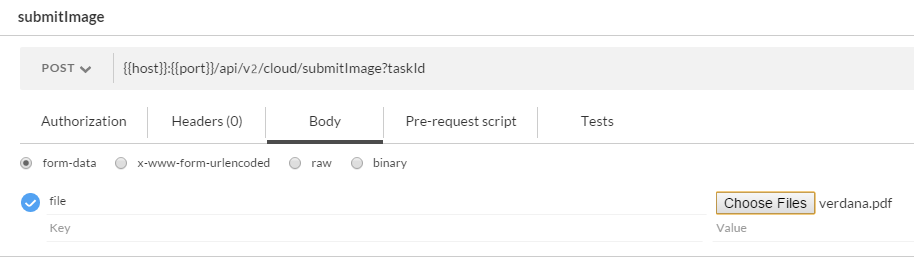
Copy
taskIdfrom the response:<?xml version="2.0" encoding="UTF-8" standalone="yes"?>
<response>
<task id="5b06b1b295ac0b000144fb7e" processEndTime="" processStartTime="" registrationTime="2018-05-24T12:36:02"
resultUrl="http://ocr2-dev2.crowdcomputingsystems.com:8080/api/v2/cloud/download?taskId=5b06b1b295ac0b000144fb7e&
result=1" resultUrl2="http://ocr2-dev2.crowdcomputingsystems.com:8080/api/v2/cloud/download?taskId=5b06b1b295ac0b000144fb7e&
result=2" resultUrl3="http://ocr2-dev2.crowdcomputingsystems.com:8080/api/v2/cloud/download?taskId=5b06b1b295ac0b000144fb7e&
result=3" statusChangeTime="2018-05-24T12:36:02"
status="Submitted"/>
</response>Start image processing with
processDocument.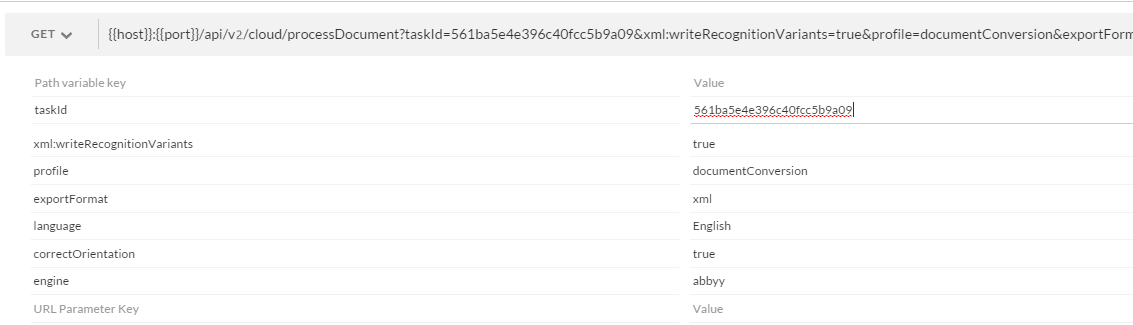
Check the task status with
getTaskStatus. Make sure to specify correcttaskId.
If the task is complete (
status="Completed"), open the results from theresultUrl,resultUrl2, orresultUrl3fields (replace&with&).
Custom request parameters
To implement custom or additional request parameters, see the sections below.
GET /cloud/processDocument
exportFormatstands for the OCR API export format. Available options are as follows:html: HTML page.pdfSearchable: the PDF type allows searching for text.xml: file contains characters or words along with their location in the original document (coordinates or frames).xmlForCorrectedImage: the same asxml, except the location is taken from a processed or adjusted document.xmlWithoutRecognitionVariants: the same asxml, but does not contains character-related data.txt: plain text (default).
For multiple export formats, you can use combinations delimited by a comma:
pdfSearchable,xmlForCorrectedImage,html. You can add maximum three types at a time.correctOrientation(trueby default) specifies whether the orientation of an image should be automatically detected and corrected. Iftrue, the page orientation is detected. If it differs from normal, the image is automatically rotated.skipPreprocessing(falseby default) disables all preprocessing steps for a document. Parameters that are disabled ifskipPreprocessing=true:convertTochangeDPIuseAutoDetectedDPIFromRangeremoveNoiseModelsremoveGarbageSizeremoveColorObjectsTyperemoveColorObjectsdiscardColorImageenhanceLocalContrastcorrectOrientationlowResolutionModeuseWordsFromDictionaryOnly
useWordsFromDictionaryOnlyspecifies if dictionary words are allowed during recognition in the base language only. Iftrue, a word that is not found in the dictionary of the base language can appear in the recognized text only if the OCR engine found no dictionary variants.dictionaryis a word or a combination of characters that can be used to improve OCR recognition. The set of words extends, not limits, the default dictionary.alphabetExtensionis a string with special symbols to extend the already defined alphabet, for example,abc123.customAlphabetis a string with special symbols to extend the already defined alphabet, for example,abc123.useDefaultPattern(falseby default): iftrue, it requires applying the default pattern from the OCR application bundle.removeNoiseModelsremoves noise on the image (optional, comma-separated values are valid:CorrelatedNoise,WhiteNoise). The method can be used for color and 8-bit gray images only.removeGarbageSizeremoves garbage (excess dots that are smaller than a certain size) from the image. The parameter is optional, valid value >0and-1for automatic garbage size detection.skipTextLayerExtraction: a text layer of the source PDF file is not used, whereas the image layer is recognized by the OCR engine.debugturns off cleanup of temporary files once the recognition is finished. Also, turns on the OCR engine logging.discardColorImage: if you work with black-and-white images or the color of images is not important, setdiscardColorImagetotrue.enhanceLocalContrastspecifies whether the local contrast of an image should be increased. Such preprocessing might increase the recognition quality. It is efficient in the following use cases:- Photos or scans of documents with textures or pictures in the background
- Photos or scans of documents with a highly colorful background or text highlighting
languagespecifies a predefined language, for example, English. You can also define multiple languages and use a comma as a separator:English,German,Polish.lowResolutionMode:true, by default. When set tofalse, it improves the recognition of images with low resolution, for example, faxes.textTypespecifies the text type in the document. The parameter can also contain several text types separated with commas, for example,normal,matrix. The following values can be used:normalhandwrittentypewritermatrixocrAocrBe13b
infoThe text type recognition works on the block level by default. It means one paragraph cannot contain a mix of types. To enable recognition per word, use the
textExtractionprofile.
Preprocessing parameters:
discardColorImage(falseby default) leaves only a black-and-white plane in the prepared image. The parameter discards the color plane of a document, so it is incompatible with theremoveColorObjectsparameter.removeColorObjectsremoves color objects from an image, color values:Blue,Green,Red,Yellow.The parameter applies color filtering to the color image plane of a document, so it is incompatible with the
discardColorImageparameter.removeColorObjectsTypespecifies the type of the objects to be removed. Supported types:Full: all color objects on the imageBackground(default): color objects on the backgroundStamp: only color stamps and signatures
infoThe method can be used for color images only. Only one type per request is admissible.
convertTo(value=TIFF): automatic detection of the file type and conversion to TIFF (convert before processing). Accepts images of the following formats: PDF, PNG, JPG, JPEG.pages: selection of pages from PDF files for recognition, for example,pages=1,2,3,10-15.changeDPIcontains the new DPI value. The admissible range is from 50 to 3,200, for example,changeDPI=300.useAutoDetectedDPIFromRangeselects the best resolution from the specified range and changes the resolution of the image. The range should be in the JSON format, for example,{"min": 50,"max": 3200}.ChangeDPIis not applicable whenuseAutoDetectedDPIFromRangeis defined. When the engine cannot define the best DPI, the original DPI is used.timeoutsets up a timeout in seconds between task execution.storePreprocessedDocspecifies whether preprocessed documents should be saved to data storage.
POST /cloud/processImage
filestands for the file in one of the following formats: PDF, PNG, JPG, JPEG.exportFormatdefines the OCR API export format:html: HTML page.pdfSearchable: the PDF type allows searching for text.xml: the file contains characters or words along with their location in the original document (coordinates and frames).xmlForCorrectedImage: the same as XML, except location is taken from a processed or adjusted document.txt: plain text (default).
For multiple export formats, you can use combinations delimited by the comma:
pdfSearchable,xmlForCorrectedImage,html. You can use maximum three types at a time.xml:writeRecognitionVariantssets theXMLandxmlForCorrectedImageformats to contain all variants of a character or word, in which case OCR considers them as a possible recognition.detectLanguagespecifies whether FineReader Engine should automatically detect the recognition language of a text. Auto detection is intended to be used during the recognition of documents the language of which is not known to you.profileallows fine-tuning the FineReader Engine. Supported profiles:documentConversionfor converting documents into editable formats, optimized for accuracytextExtractionfor extracting text from documents, optimized for accuracybarcodeRecognitionfor extracting barcodes, optimized for accuracydataExtractionfor extracting all possible data from a document and storing it in a structured way, including objects, such as printed and handwritten text, tables, barcodes, checkmarks, and images with their location and attributes.
The settings in these profiles are most suitable in the corresponding situations.
correctOrientation(trueby default): iftrue, the page orientation is detected. If it differs from normal, the page is automatically rotated.skipPreprocessing(falseby default) disables all preprocessing steps for a document. The following parameters are disabled ifskipPreprocessing=true:convertTochangeDPIuseAutoDetectedDPIFromRangeremoveNoiseModelsremoveGarbageSizeremoveColorObjectsTyperemoveColorObjectsdiscardColorImageenhanceLocalContrastcorrectOrientationlowResolutionModeuseWordsFromDictionaryOnly
customAlphabet: a string with special symbols to extend the already defined alphabet, for example,abc123.useWordsFromDictionaryOnly: specifies if only the dictionary words are allowed during recognition in the base language. Iftrue, a word that is not found in the dictionary of the base language can appear in the recognized text only if the OCR engine found no dictionary variants.alphabetExtension: a string with special symbols to extend an already defined alphabet.useDefaultPattern(falseby default): iftrue, it requires applying the default pattern from the OCR application bundle.dictionary: a file where each line contains a word or combination of characters that can be used to improve OCR recognition. The set of words extends, not limits, the default dictionary.removeNoiseModelsremoves noise in an image (optional, comma-separated values are also valid:CorrelatedNoise,WhiteNoise). This method can be used for color and 8-bit gray images only.removeGarbageSizeremoves garbage (excess dots that are smaller than a certain size) from an image. The [parameter is optional, and valid values are > 0.enhanceLocalContrastspecifies whether the local contrast of an image should be increased. Such preprocessing can increase the recognition quality. It is efficient in the following cases:- Photos or scans of documents with a texture or pictures in the background
- Photos or scans of documents with a highly colorful background or text highlighting
languagespecifies a predefined language, for example, English.lowResolutionModeimproves recognition of images with low resolution, for example, faxes. Iftrue, it adapts to a low-resolution image.skipTextLayerExtraction: text layer of the source PDF file is not used, whereas the image layer is recognized by the OCR engine.debugturns off cleanup of temporary files once the recognition is finished. Also, turns on the OCR engine logging.textTypespecifies the text type in the document. This parameter can also contain several text types separated with commas, for example,normal,matrix. The following values can be used:normalhandwrittentypewritermatrixocrAocrBe13b
infoText type recognition works on the block level by default. It means one paragraph cannot contain a mix of types. To enable recognition per word, use the
textExtractionprofile.
Preprocessing parameters:
discardColorImage(falseby default) leaves only the black-and-white plane in a prepared image. The parameter discards the color plane of a document, so it is incompatible with theremoveColorObjectsparameter.removeColorObjectsremoves color objects from an image. Available colors values:Blue,Green,Red,Yellow.removeColorObjectsTypespecifies the type of the objects to be removed. Supported types:Full: all color objects on the imageBackground: color objects in the backgroundStamp: only color stamps and signatures.
infoThe method can be used for color images only. Also, you can use only one type per request.
convertTo(value=TIFF): autodetection of the file type and conversion to TIFF (convert before processing). Accepts images of the following formats: PDF, PNG, JPG, JPEG.pages: selection of pages from PDF files for recognition, for example,pages=1,2,3,10-15.changeDPIcontains the new value of DPI. The admissible range is from 50 to 3200, for example,changeDPI=300.useAutoDetectedDPIFromRangeselects the best resolution from the specified range and changes the image resolution. The range should be in the JSON format, for example,{"min": 50,"max": 3200}.ChangeDPIis not applicable whenuseAutoDetectedDPIFromRangeis defined. When the engine cannot define the best DPI, the original DPI is used.timeout: the maximum allowed timeout (in seconds) for a single task execution by an OCR Worker. The timeout countdown starts when the OCR Worker starts task execution. If the task execution time exceeds the given timeout, the task is forcibly killed.storePreprocessedDocspecifies whether preprocessed documents should be saved to data storage.
Custom APIs
GET /cloud/summary
Returns the total number of tasks with statuses.
Sample response:
        Total tasks SUBMITTED
        0


        Total tasks QUEUED
        0


        Total tasks SCHEDULED
        0


        Total tasks INPROGRESS
        0


        Total tasks COMPLETED
        1124


        Total tasks PROCESSINGFAILED
        283


        Total tasks DELETED
        0


        Total tasks CANCELLED
        28
Example value:
<?xml version="2.0" encoding="UTF-8"?>
<MultipleTaskInfo>
  <taskInfoList>
    <message>string</message>
    <tasksCount>0</tasksCount>
  </taskInfoList>
</MultipleTaskInfo>
GET /cloud/cancelTasks
Cancels all tasks with the SUBMITTED, QUEUED, and INPROGRESS statuses and returns the number of cancelled tasks for each status group.
Example value:
<?xml version="2.0" encoding="UTF-8"?>
<MultipleTaskInfo>
  <taskInfoList>
    <message>string</message>
    <tasksCount>0</tasksCount>
  </taskInfoList>
</MultipleTaskInfo>
Add a new parameter that defines which tasks to cancel. For example, the upload date or task ID.
POST /cloud/trainPattern
Trains a user pattern for the symbol.
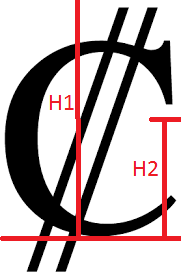
file: image file with a symbol.baseLine: contains the distance from the base line to the top edge of the cropped image of the character. The base line is the line on which the characters are located.- The top edge of the image is determined by the character orientation (H1 in the figure below).
smallSymbolHeight: specifies the height of small characters (in pixels) in the source image (H2 in the figure below).symbol: symbol associated with pictures.mergePattern: pattern uploaded as a file. If provided, the training output pattern is combined with the uploaded.
Request example:
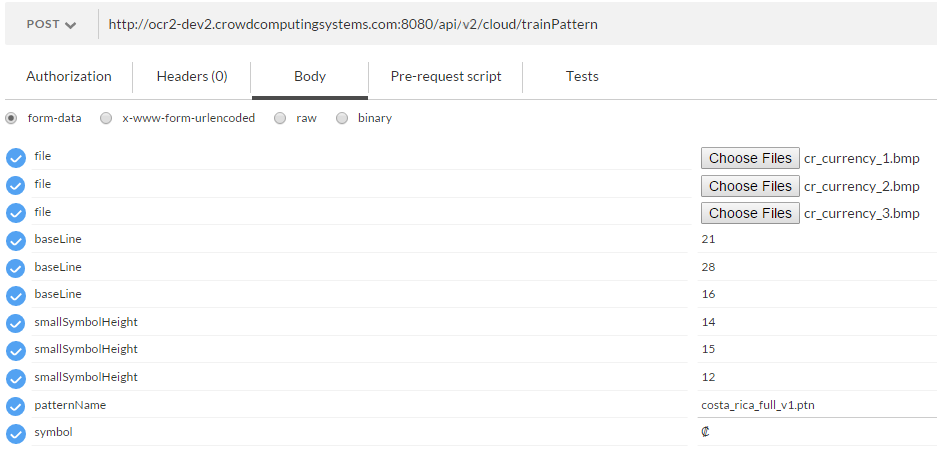
The response is a downloadable pattern file in a proprietary binary format.
Example value:
<?xml version="2.0" encoding="UTF-8"?>
<Error>
  <message>
    <content>string</content>
  </message>
</Error>
When using a custom pattern, you need to specify alphabetExtension with the trained symbol in processImage or processDocument.
POST /submitPattern
The method attaches a pattern file for recognition of special symbols to an existing task created with submitImage. To be consequently processed with the processDocument action.
Parameters:
pattern: the pattern file to uploadtaskId: mandatory
GET /project-info
Returns information about the OCR version.
{
  "branch": "string",
  "buildDate": "string",
  "revision": "string",
  "tags": "string",
  "version": "string"
}
GET /health-check
Returns information about the health of OCR components.
{
  "components": [
    null
  ],
  "errorCount": 0,
  "errors": [
    "string"
  ],
  "infos": [
    "string"
  ],
  "name": "string",
  "projectInfo": {
    "branch": "string",
    "buildDate": "string",
    "revision": "string",
    "tags": "string",
    "version": "string"
  },
  "status": "OK",
  "warningCount": 0,
  "warnings": [
    "string"
  ]
}
GET /cloud/activeLicense
Returns the current active license and all available information about this license.

Result example
{
  "allowedCoresCount": 0,
  "availableBarcodeModules": [
    "string"
  ],
  "availableEngineModules": [
    "string"
  ],
  "availableExportFormats": [
    "string"
  ],
  "availableLanguageSets": [
    "string"
  ],
  "availableTextTypes": [
    "string"
  ],
  "availableVisualComponents": [
    "string"
  ],
  "category": "string",
  "expirationDate": "string",
  "limited": true,
  "minimumCoresCountPerInstance": 0,
  "serialNumber": "string",
  "volume": 0,
  "volumeRefreshingPeriod": "string",
  "volumeRemaining": 0,
  "warnings": [
    "string"
  ]
}
The meaning of the fields in the response:
| Attribute | Explanation |
|---|---|
availableTextTypes | Set of the text types available in the license. |
availableBarcodeModules | Set of the OCR engine barcode modules available in the license. |
availableEngineModules | Set of the OCR engine modules available in the license. |
availableExportFormats | Set of the export formats available in the license. |
availableVisualComponents | Set of visual components available in the license. |
availableLanguageSets | Set of the language sets available in the license. |
volumeRefreshingPeriod | Information about the limitation period if the license limits the number of processed pages or characters during this period. |
volume | Total number of pages or characters that can be processed during a period if the license has such a limitation. |
volumeRemaining | Remaining number of pages or characters that can be processed till the end of the current period if the license has such a limitation. When this property value reaches 0, the analysis, recognition, and export operations are no longer possible. |
serialNumber | Serial number of the license. |
allowedCoresCount | Number of CPU cores that can be used simultaneously. If the value of this property is 0, the number of CPU cores is unlimited. |
minimumCoresCountPerInstance | Minimum number of CPU cores allocated by the OCR engine at initialization. |
GET /cloud/listLicenses
Returns a list of all licenses connected to the current OCR engine.

List of licenses
[
  {
    "allowedCoresCount": 0,
    "availableBarcodeModules": [
      "string"
    ],
    "availableEngineModules": [
      "string"
    ],
    "availableExportFormats": [
      "string"
    ],
    "availableLanguageSets": [
      "string"
    ],
    "availableTextTypes": [
      "string"
    ],
    "availableVisualComponents": [
      "string"
    ],
    "category": "string",
    "expirationDate": "string",
    "limited": true,
    "minimumCoresCountPerInstance": 0,
    "serialNumber": "string",
    "volume": 0,
    "volumeRefreshingPeriod": "string",
    "volumeRemaining": 0,
    "warnings": [
      "string"
    ]
  }
]
POST /cloud/prepareLicense
Generates an input for a license request.
Example value:
"string"
POST /cloud/activateLicense
Activates a license. For activation, you need to have a file with the license.
Example value:
{
  "message": {
    "content": "string"
  }
}
GET /metrics/count
Gets a task count with the status.
Request example:
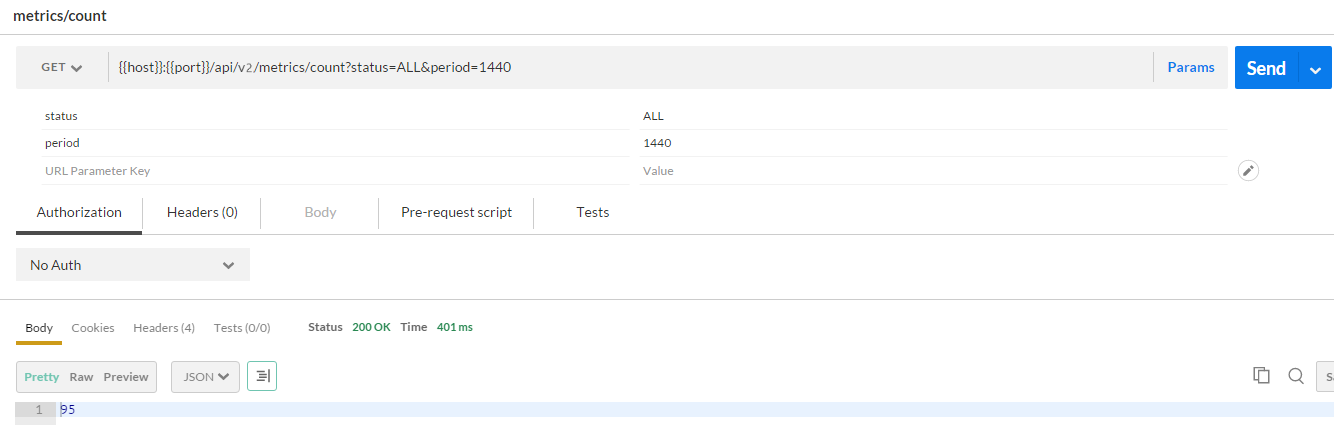
The parameters are as follows:
status: either one ofTaskStatusvalues or aggregates, such asDONE,PROCESSING,ALL.period: number of minutes to subtract from the current time. By default, the range isNOW-MINUTEStoNOW. When the period is negative, the range isBEGINNINGtoNOW-MINUTES. The default is 60 minutes.
GET /metrics/stats
Request example:
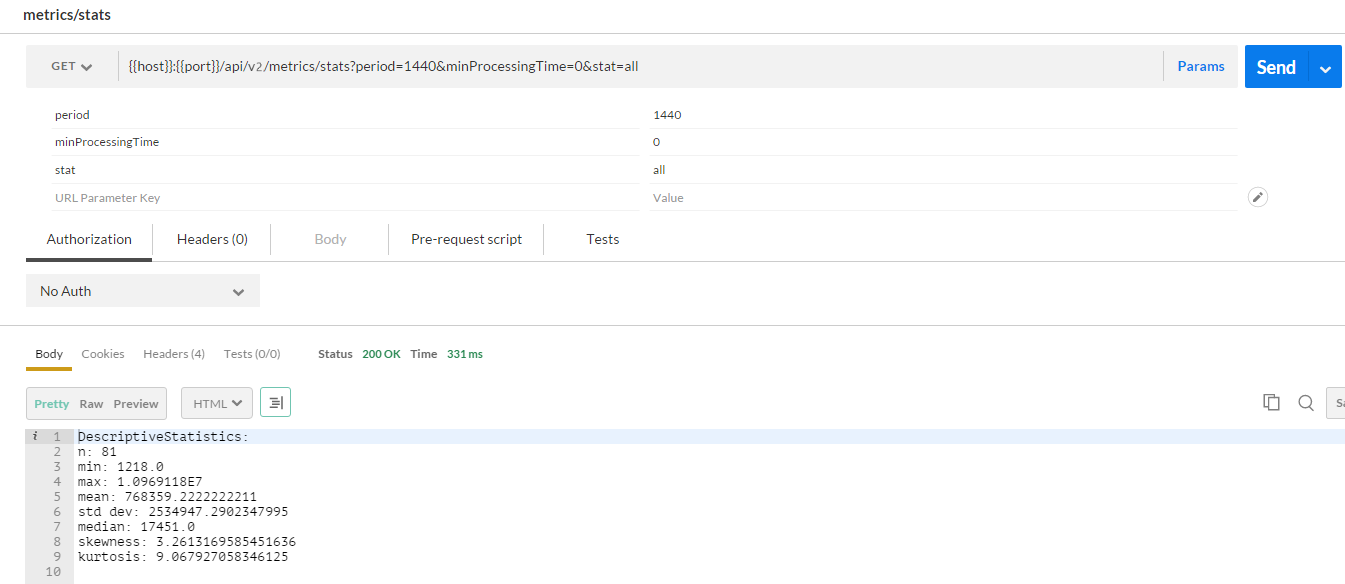
The parameters are as follows:
period: number of minutes to subtract from the current time. By default, the range isNOW-MINUTEStoNOW. The default is 60 minutes.minProcessingTime: tasks with a processing time less than this value are discarded. The default is 1,000 (1 second).stat: descriptive statistics. Possible values aremin,max,n(number of values),std,percentileN(where N is any number 0-100), or all.
Multi-worker processing
When a process starts to handle a specific task, it changes the task status so that other processes can't also start working with that task. Thus, one task can be processed only by one process-worker.
When a server is terminated during the task processing, there is no way of sending the task to the queue immediately, but there's a service that runs on a schedule and adds such tasks to the queue.
Server specification and usage guidance
Currently, it's a low-parameter instance. Don't submit many documents. The license allows only 10K pages to be recognized.
How to use OCR API
OCR is a technology for converting document images into editable text. You can recognize images using one of the API endpoints:
processImageprocessDocument
The example below illustrates how the calls are applied for data recognition:
Recognition with processImage
Use authentication if needed.
POST host:port/api/v2/cloud/processImage
Starts image processing:
- Upload a document or an image as a file.
- Add parameters for correct recognition.
- Send a request.
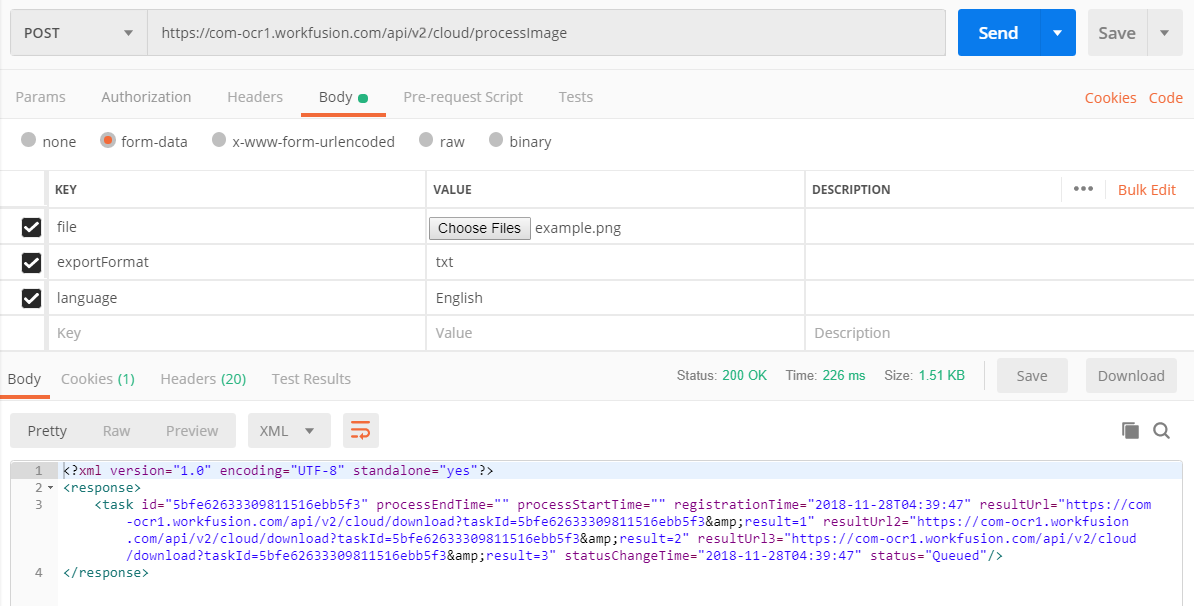
A response has a lot of useful information: taskId, processing time, result URLs, status of recognition.
taskId: used during the next requests in the following steps (copytaskIdfrom a response).ResultUrl: recognition result is available by this link after completion of recognition.
GET host:port/api/v2/cloud/getTaskStatus?taskId=value
Checks the task status. Set the taskId parameter (determined in the previous step) and send a request. As a result, the task status with resultUrls are provided in a response.
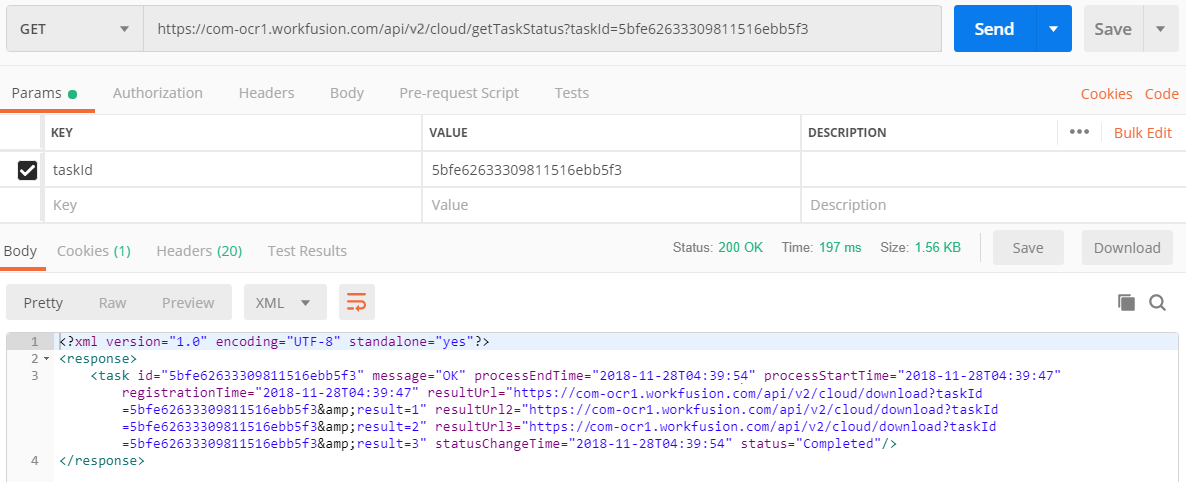
If the task is complete (status="Completed"), open results from the resultUrl, resultUrl2, or resultUrl3 fields (replace & with &).
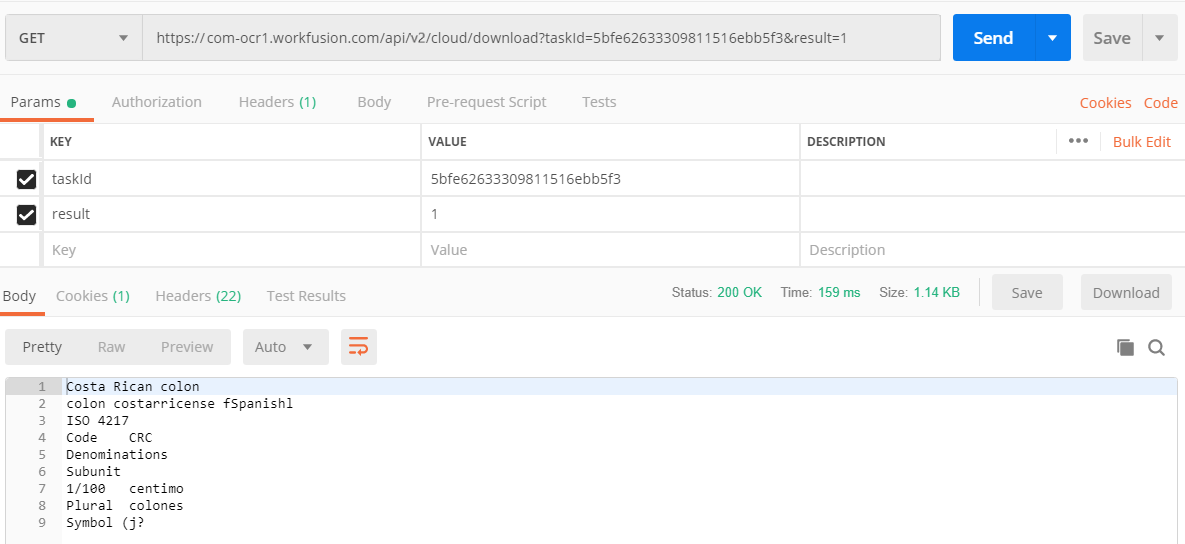
GET host:port/api/v2/cloud/download?taskId=value
If a task is complete (status="Completed"), you can download results from links in resultUrl, resultUrl2, resultUrl3 (depends on the export format).
Recognition with processDocument
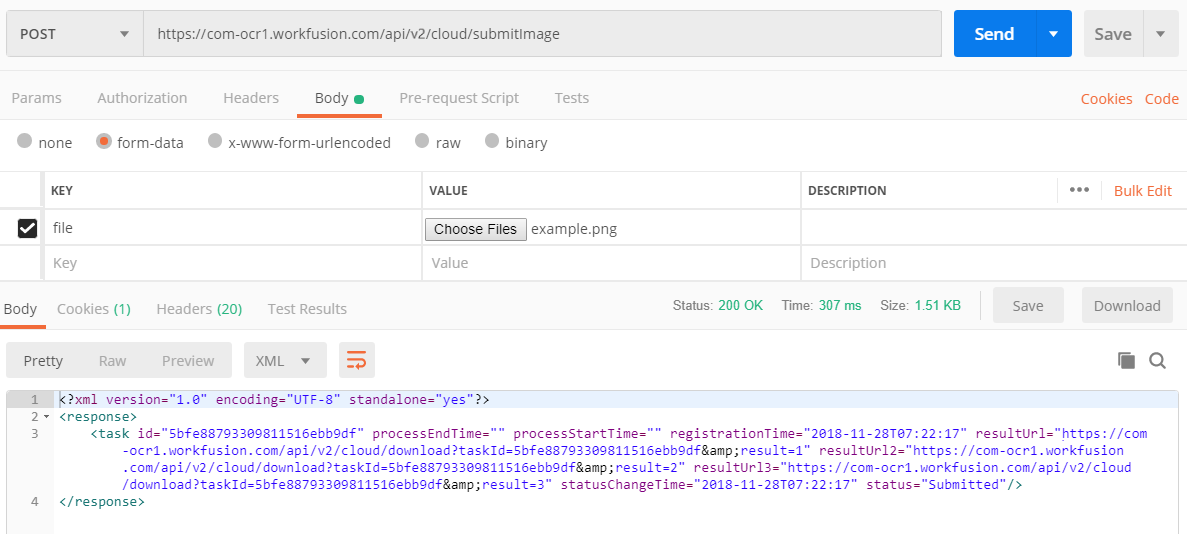
POST host:port/api/v2/cloud/submitImage
Use the API call to upload a file and copy taskId from the response.
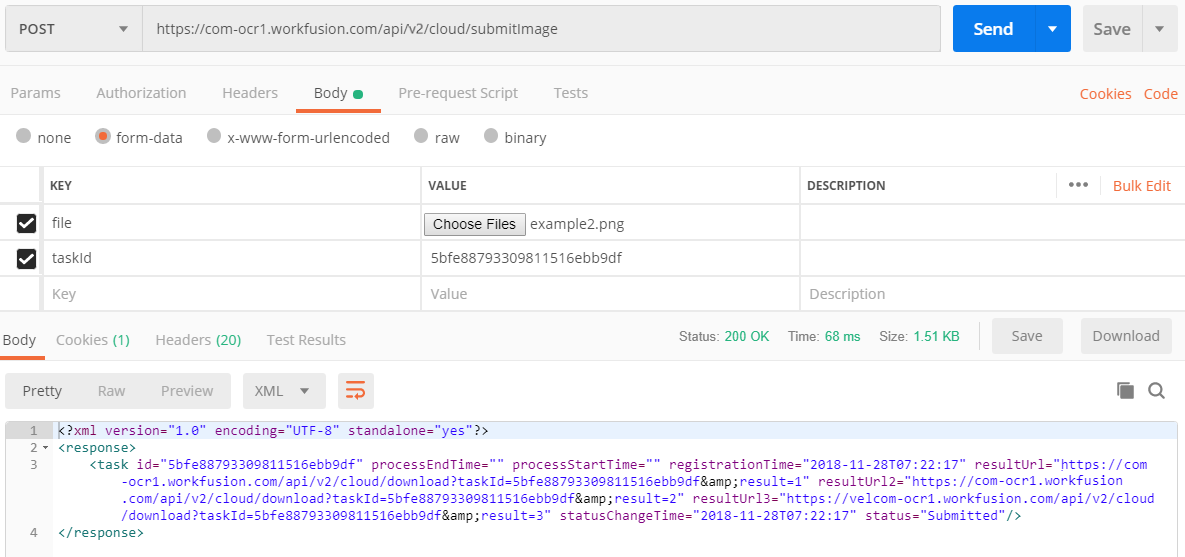
If you need to upload several files for recognition, do as follows:
- Submit an image.
- Copy ID.
- Add the
taskIdparameter to thesubmitImageAPI call. - Submit one more image.
POST host:port/api/v2/cloud/processDocument
Starts image processing.
- Set the
taskIdparameter. ThetaskIdvalue is determined in the previous step. - Add parameters for correct recognition.
- Send a request.
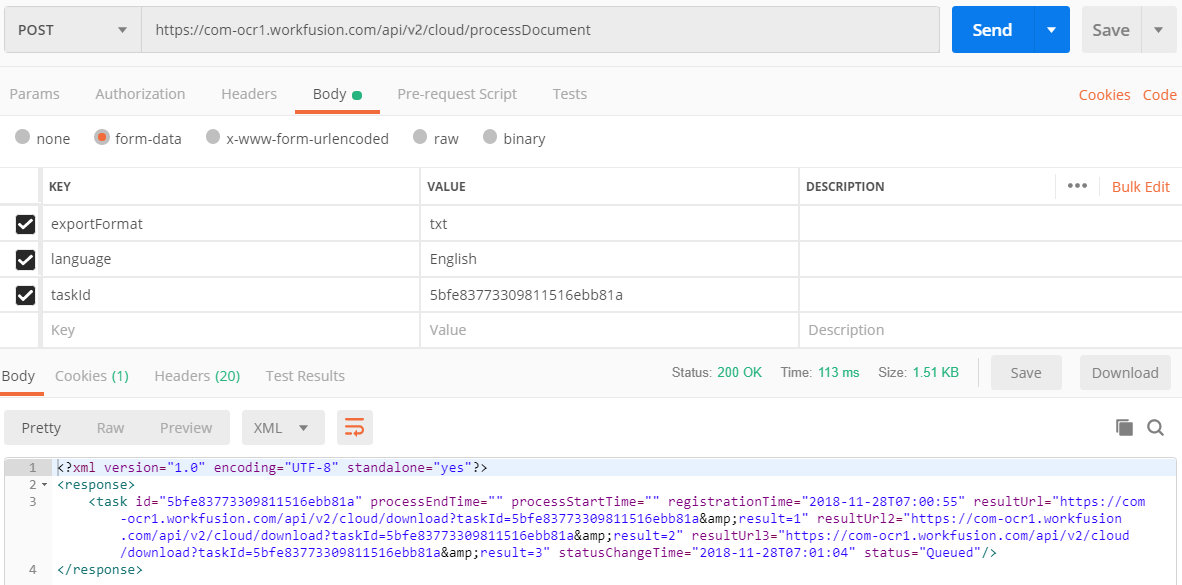
GET host:port/api/v2/cloud/getTaskStatus?taskId=value
Checks a task status. Make sure to specify correct taskId.
If a task is complete (status="Completed"), open results from the resultUrl, resultUrl2, or resultUrl3 fields (replace & with &).
GET host:port/api/v2/cloud/download?taskId=value
If a task is complete (status="Completed"), you can also download results from the links in resultUrl, resultUrl2, resultUrl3 (depends on the export format).
OCR pattern creation
Extended recognition with a custom trained pattern can be used for:
- Text set in decorative fonts
- Texts containing unusual characters, for example, mathematical symbols
- Long documents of low print quality (more than a hundred pages)
For example:

The OCR product provides a possibility to create and train a user pattern that will be used for the further recognition.
The pattern training works as follows: symbols are recognized in the training mode, and, subsequently, a pattern is created. The pattern is used as a source of additional information during recognition to aid the recognition of the remaining text.
At first, prepare images and data for training. Then, prepare several examples of symbols in different views and define symbol parameters: baseLine, smallSymbolHeight.
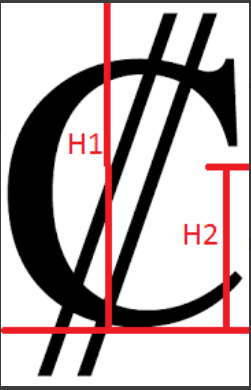
baseLinecontains the distance from the base line to the top edge of the cropped image of the character. The base line is the line on which the characters are located.The top edge of the image is determined by the character orientation (H1 in the figure above).
smallSymbolHeightspecifies the height of small characters in pixels in the source image (H2 in the figure above).
To optimize recognition, experiment with the baseLine and smallSymbolHeight parameters. See the examples below:
| Image | Value |
|---|---|
 |
|
 |
|
 |
|
 |
|
 |
|
 |
|
 |
|
 |
|
 |
|
 |
|
To determine the baseLine and smallSymbolHeight parameters, consider the symbol position in the text line within the actual document. For example, if you consider a checkbox in a tax form, it is much bigger than normal letters, and the base line is slightly higher (1 pixel for W-8BEN-E) than the bottom line of the checkbox. So, don't guess the parameters looking at the symbol in isolation, consider the document layout.
Larger pictures of symbols are more efficient for training, preferably around 40-50 pixels. Generally, you need multiple input images for training.
POST host:port/api/v2/cloud/trainPattern
Set all available examples of a symbol with parameters and required parameters to an API request.
file: image file with the symbol.baseLine: value from the previous step.smallSymbolHeight: value from the previous step.symbol: symbol associated with pictures.
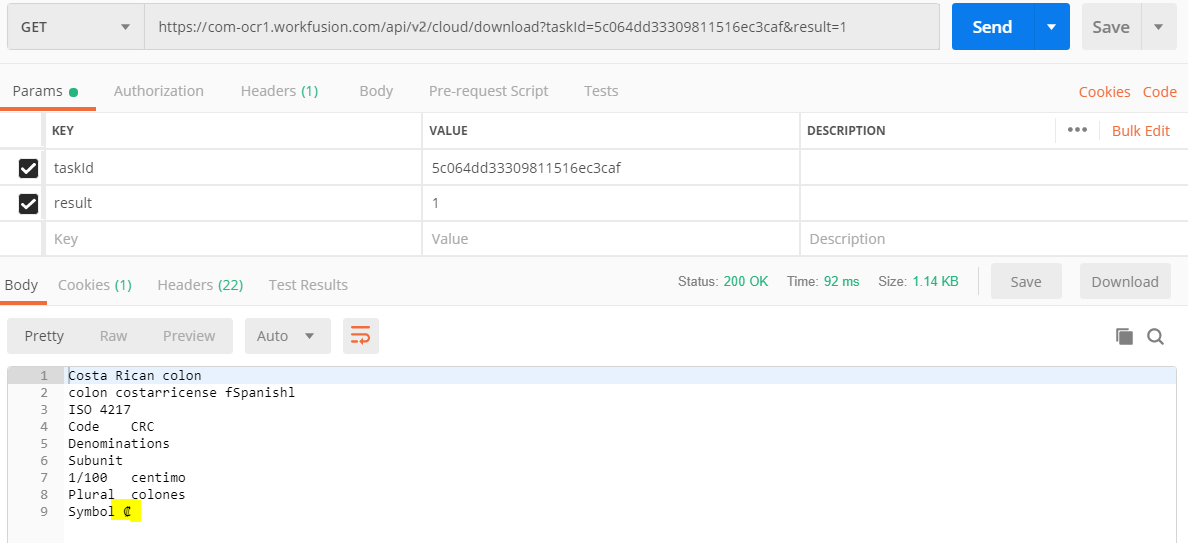
(symbol=₡)
Send and download the trainPattern result as a PTN file.
mergePattern
mergePattern: file upload for a pattern; if provided, the training output pattern is combined with the uploaded pattern.
Prepare images and data for training as was described in OCR pattern creation.
POST host:port/api/v2/cloud/trainPattern
Set all available examples of symbol with parameters and required parameters to an API request.
file: image file with the symbolbaseLine: value from the previous stepsmallSymbolHeight: value from the previous stepsymbol: symbol that is associated with pictures
(symbol=₡)
Use the mergePattern parameter to combine the existing pattern with the trained one in advanced.
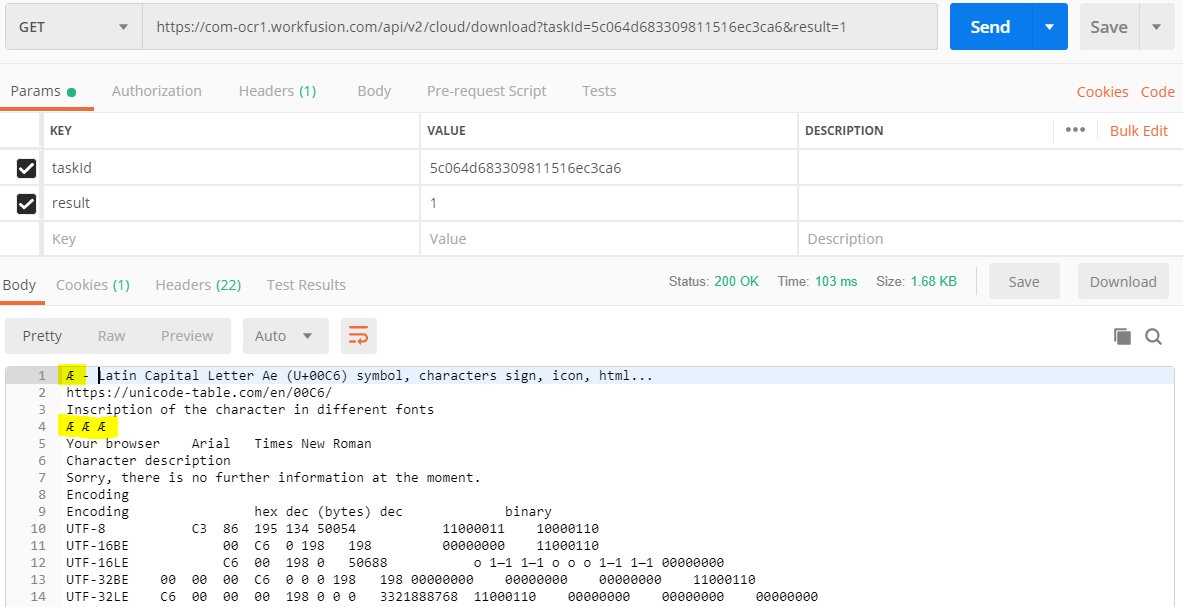
In the current case, ae.ptn is a trained pattern for recognition of the Æ symbol.
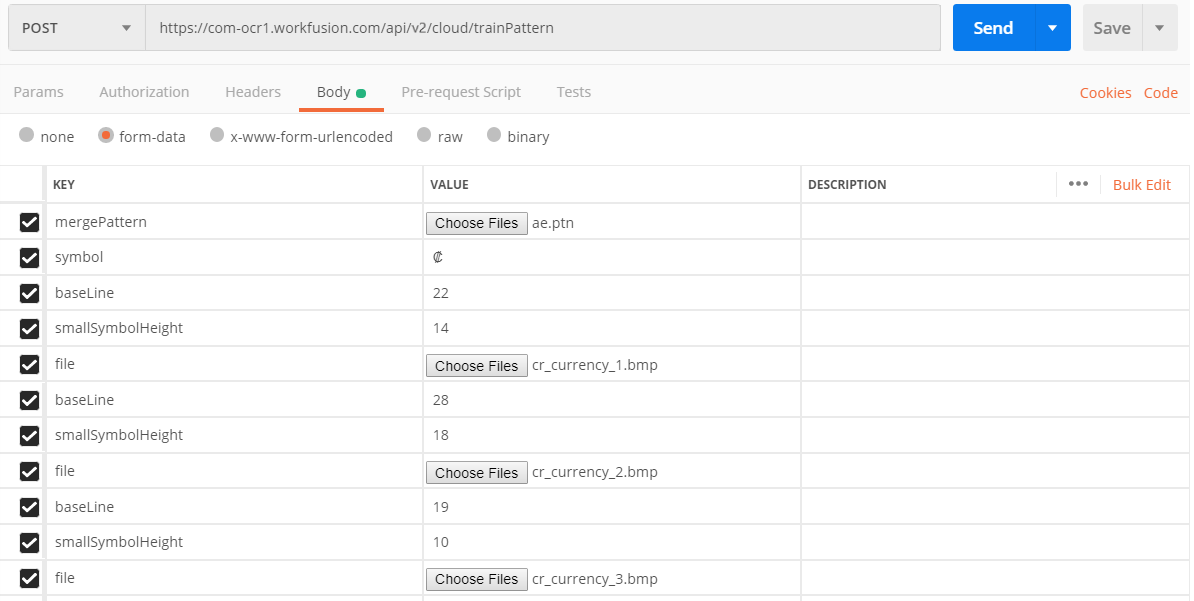
Send and download the trainPattern result as a PTN file.
As a result, the trained pattern is available for recognition of two symbols.
Apply the pattern for the first symbol as described below.
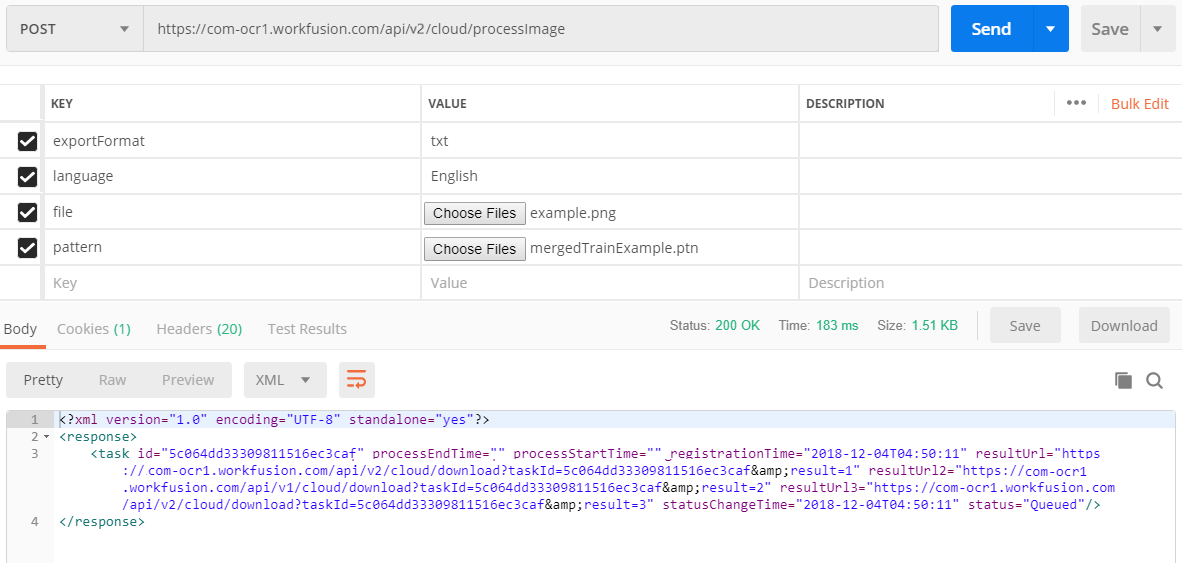
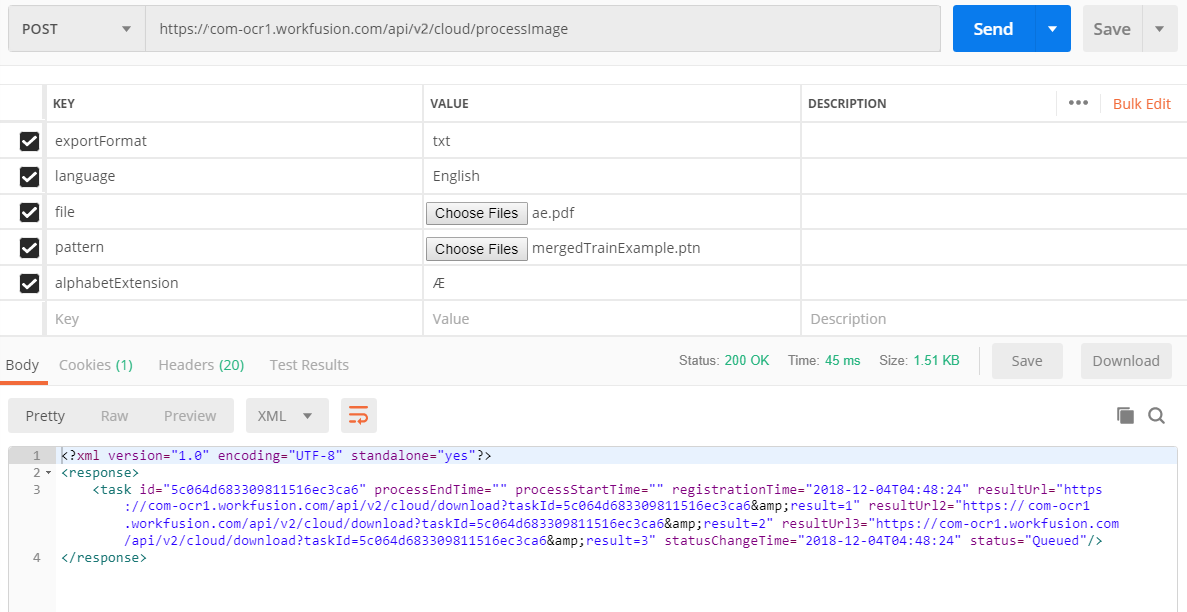
pattern: file upload for a pattern to be applied to recognize special symbols.
- You need the symbol to be added to
alphabetExtension(alphabetExtension = Æ). - You can use either an explicit pattern uploaded with the field or
useDefaultPattern=true, not both.
processImage: apply OCR pattern
POST host:port/api/v2/cloud/processImage
Add the trainPattern file to the ProcessImage request.
pattern: a file parameter for better recognition.
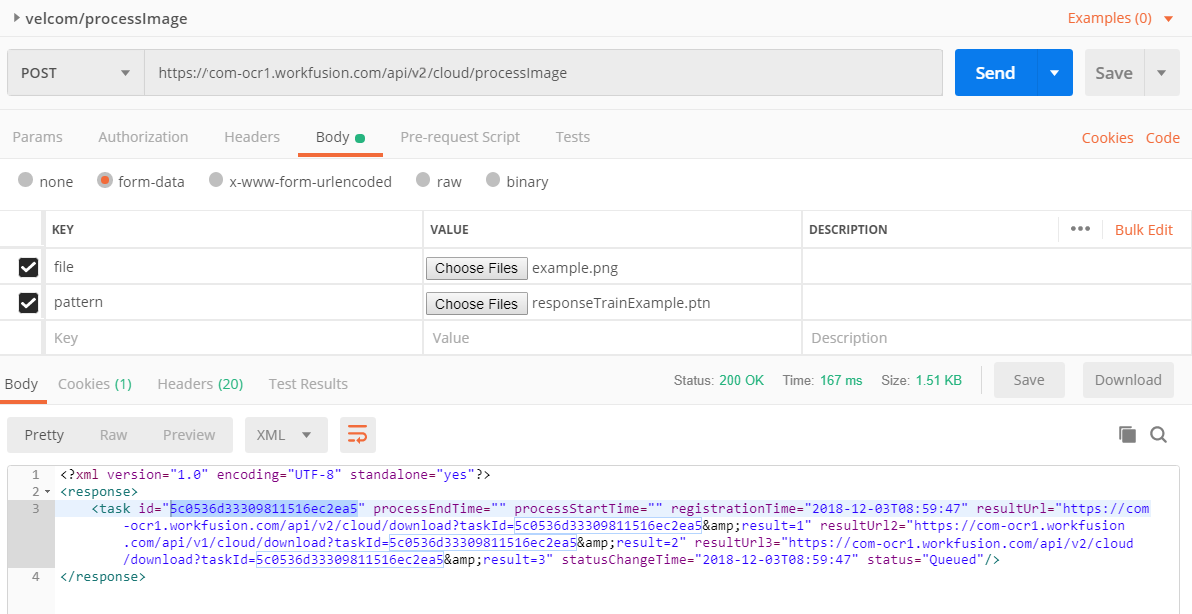
Download the results where trainPattern is applied: the ₡ symbol is recognized as expected.
processDocument: apply OCR pattern
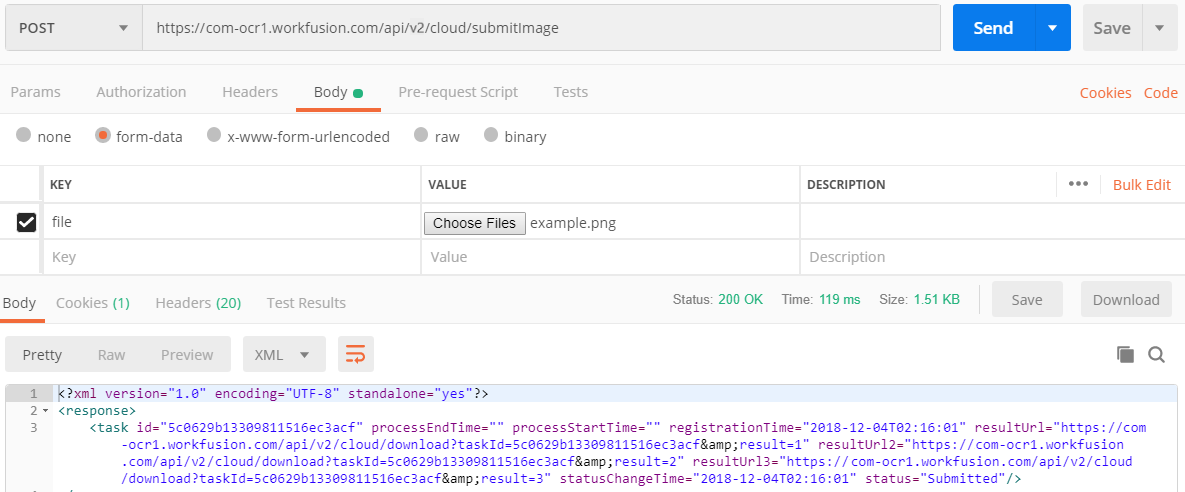
First, submit an image for recognition.
POST host:port/api/v2/cloud/submitImage
Copy the ID for the subsequent steps. After that, apply the trained and downloaded submitPattern.
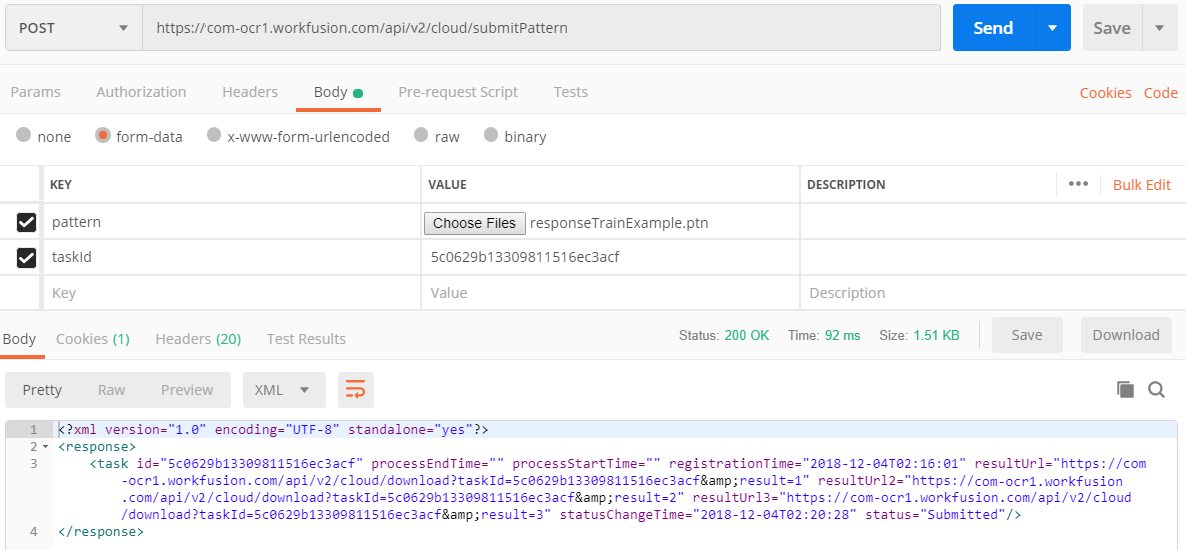
POST host:port/api/v2/cloud/submitPattern
Set the taskId parameter and a pattern file. The taskId value is determined in the previous step.
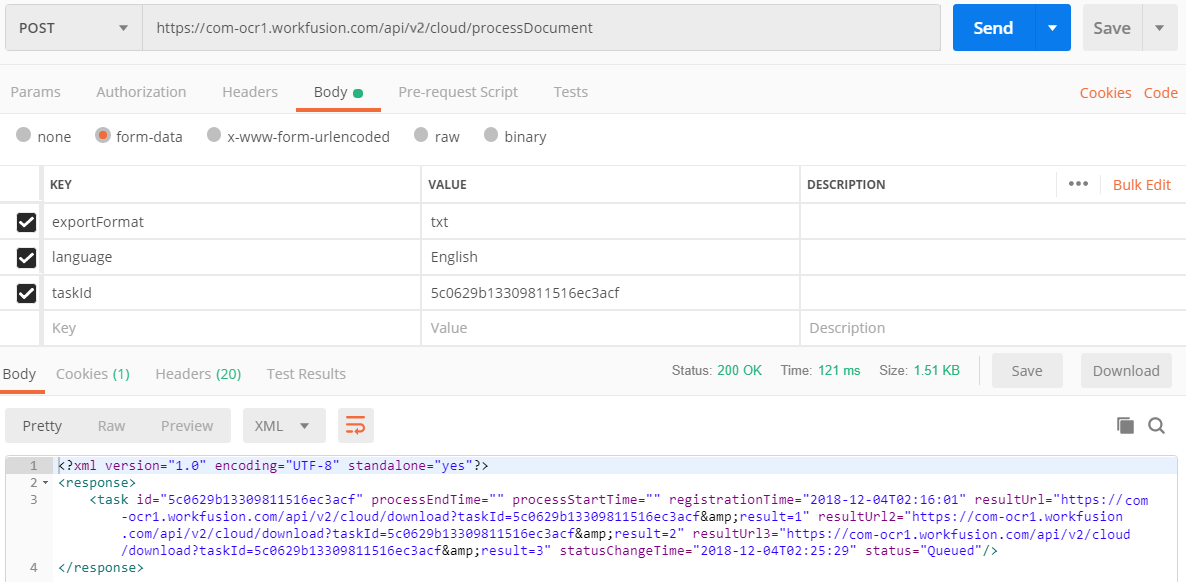
POST host:port/api/v2/cloud/processDocument
Starts image processing. The trained pattern was uploaded in the previous step.
Set the
taskIdparameter.Add parameters for correct recognition.
Send a request.
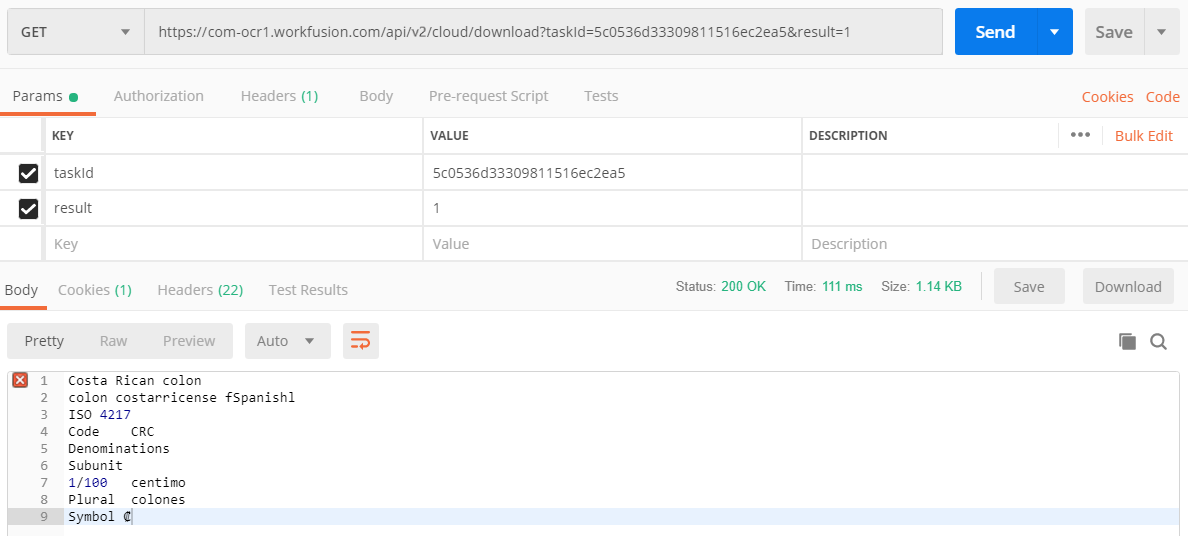
Download results where
trainPatternis applied: the₡symbol is recognized as expected.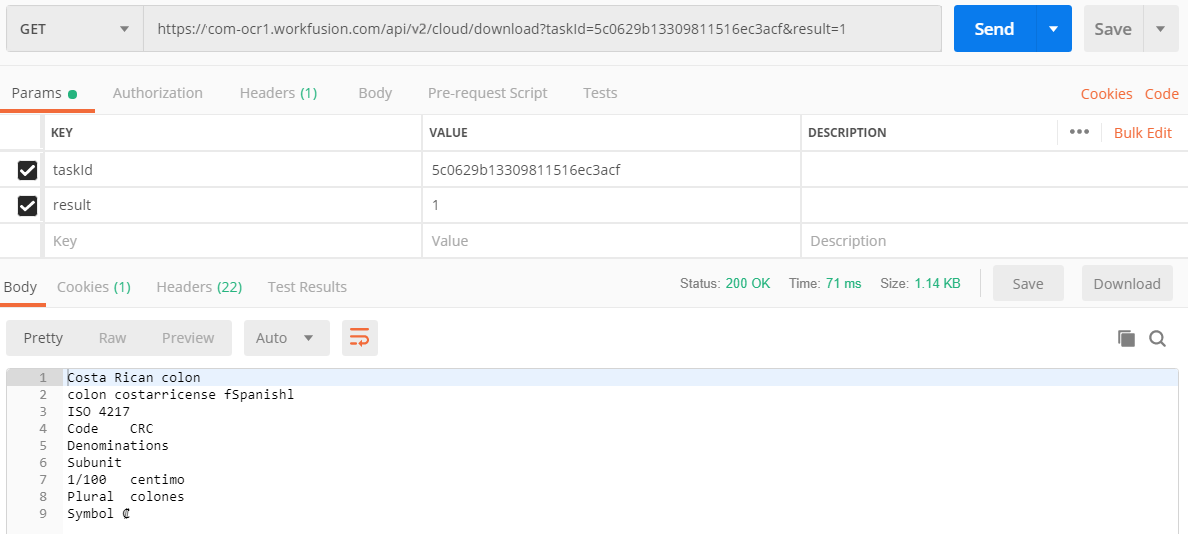
Practical usage tips
Recognition quality
The following recommendations can help you improve recognition quality:
- Use custom
dictionary. - Fetch plain text from PDF and set it to the
originalTextparameter. - Don't use the
removeGarbageSizeparameter for searchable PDFs and use it carefully for scanned PDF or image. Sometimes, it can degrade results. - Train and use patterns for repeatable unrecognized cases. By default, the
costa_rica_currencypattern. - A searchable PDF is more preferable for recognition than a high-DPI image created from it.
- The recommended resolution for a source image: 300 DPI for typical texts (10 pt or larger) and 400-600 DPI for texts in smaller fonts (9 pt or smaller).
Performance improvement
The following recommendations can help you improve recognition quality:
- Use
skipPreprocessing=trueat least for searchable PDF documents. It saves up to 30% processing time. - Use
xml:writeRecognitionVariants=falseif you don't need character or word variants in the output XML file. It saves up to 30% processing time, memory, and disk space.