Configure classification model rules
Classification model rules define how the model processes a hit. When a name is run against hit providers, they return hit data. Based on the configured rules and thresholds, each hit is given a hit score that determines whether it should be treated as False Positive or escalated.
Rules
The NSS classification model applies rules to determine if a hit should be marked False Positive. You can set the model to apply the rules based on the following factors:
Name: name of an individual or organization
Location: country of present and past affiliation, ownership, or citizenship
Date: date and year of birth for an individual or founding date and year for organizations
Type: hit type; individual (PERSON) or organization (ENTITY)
Gender: gender of an individual
Based on matching the hit data from providers against the input data, the NSS classification model can give the following outcomes:
Strong match
Weak mismatch
Strong mismatch
Not available, if no data is provided on either side
Thresholds
For each hit, the model provides a hit score. You can define thresholds on the minimum hit score needed for escalation.
You can also define thresholds on the Location and Date fields to include neighboring countries and date types.
Default configuration
Rules
The decision matrix below describes the default rule configuration of the NSS classification model for Name, Location, and Date when a hit is marked as False Positive. In all other cases, the hit is escalated for further review.
| Name | Location | Date | Type | Resolution |
|---|---|---|---|---|
| Strong mismatch | False Positive | |||
| Strong mismatch | False Positive | |||
| Strong mismatch | False Positive | |||
| Weak mismatch | Weak mismatch | False Positive | ||
| Weak mismatch | Weak mismatch | False Positive | ||
| Weak mismatch | Weak mismatch | False Positive |
If the comparison results are between the weak and strong factors, the model produces a Weak Mismatch outcome.
Thresholds
See the default threshold values in the table below:
| Threshold | Default value |
|---|---|
| Strong name match threshold | 0.8 |
| Strong name mismatch threshold | 0.75 |
| Strong date match threshold | 30 |
| Strong date mismatch threshold | 365 |
To configure the values to your needs, see Tuning model.
Stopwords
Stopwords are common words like "the," "and," or "is" that are typically excluded from the text analysis as they do not carry a significant meaning.
By default, the following categories of stopwords are filled in:
- Geographical: stopwords related to geographic terms
- Financial: stopwords related to financial terms
- Company: stopwords related to company-specific terms
- Miscellaneous: general stopwords that are not domain-specific
To add more stopwords and set up custom ones specific to your domain, see Tuning model.
Tuning model
To fine-tune the model, follow the steps below:
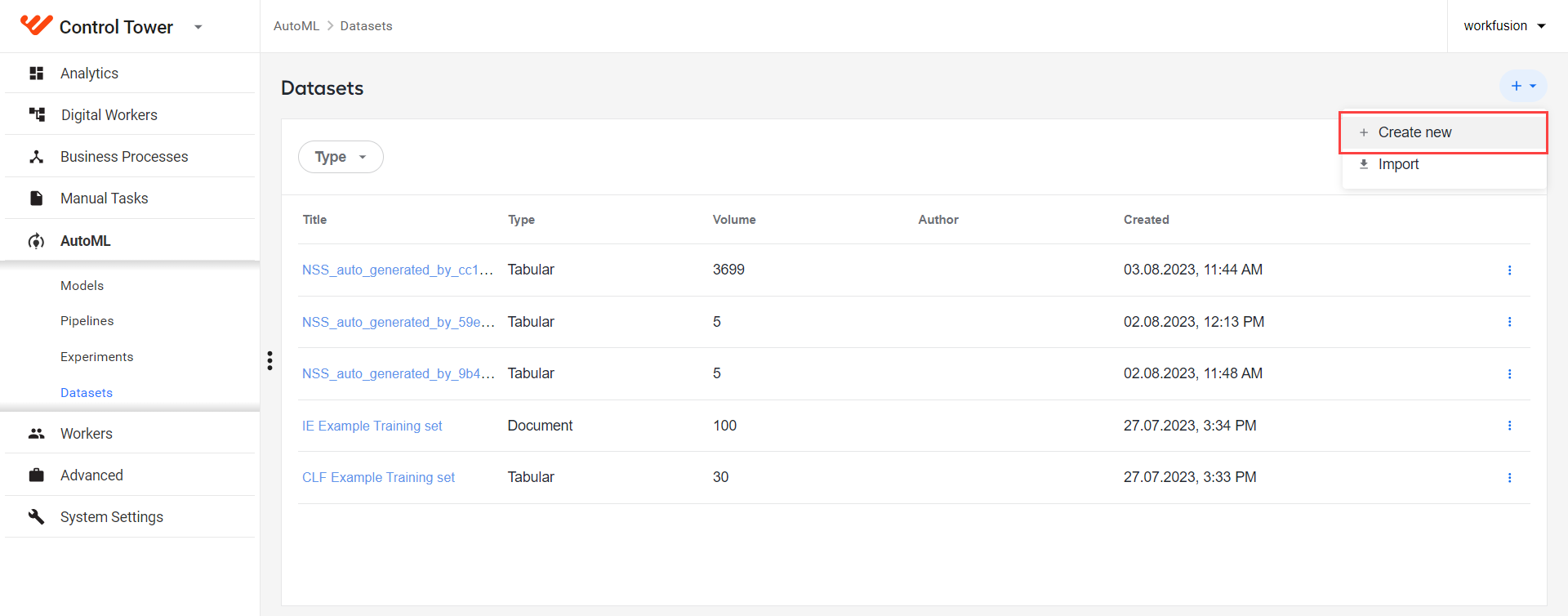
In Control Tower, go to AutoML > Datasets and create an empty dataset.
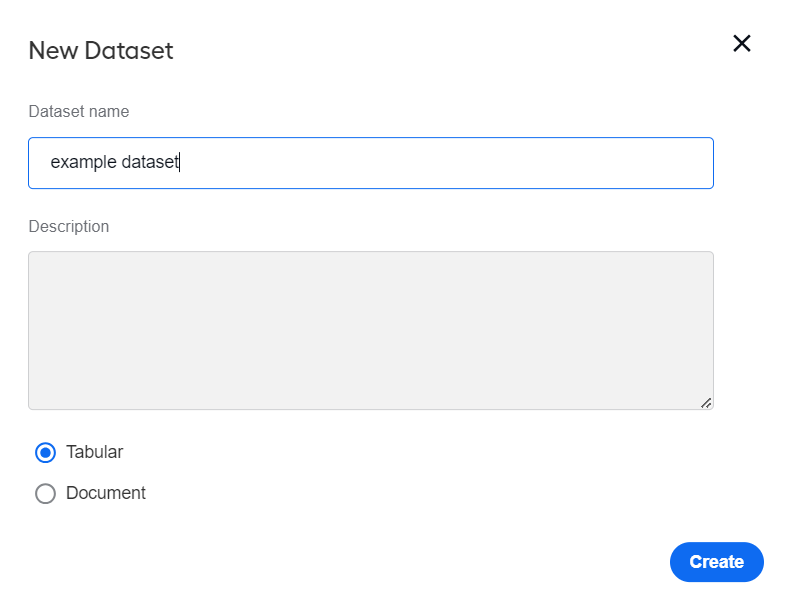
Name the new dataset and select the Tabular type.
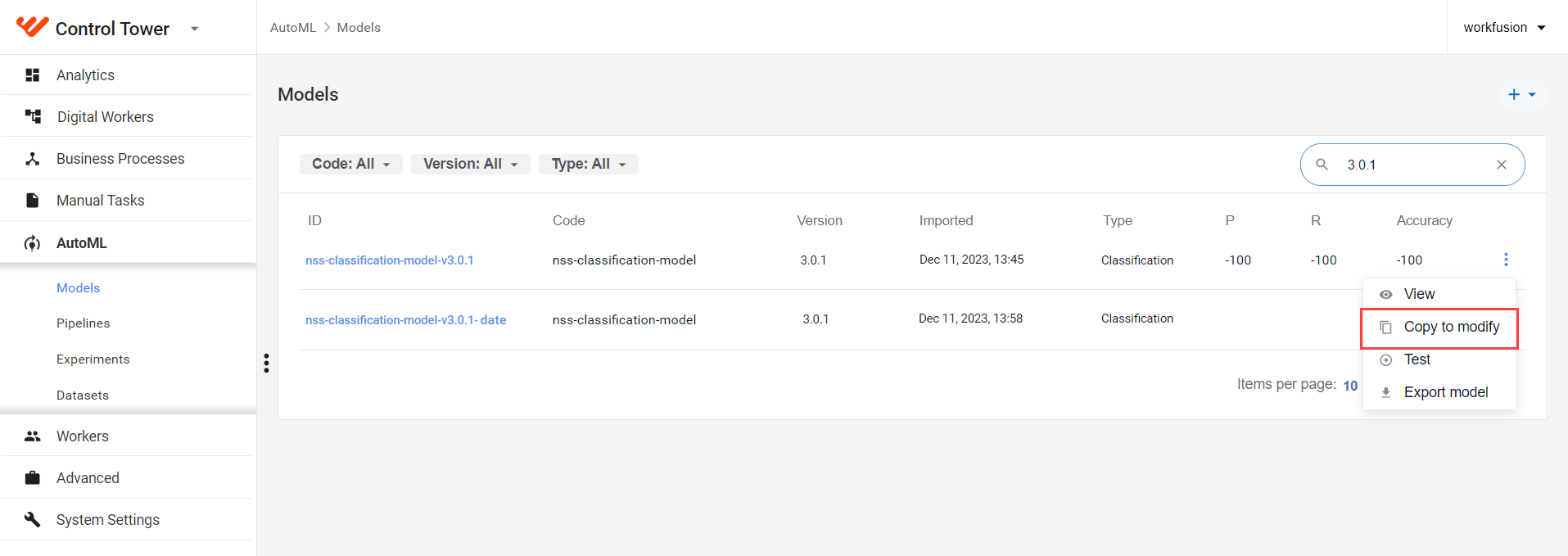
In AutoML > Models, choose NSS classification model version 3.0.1 and click Copy to modify.
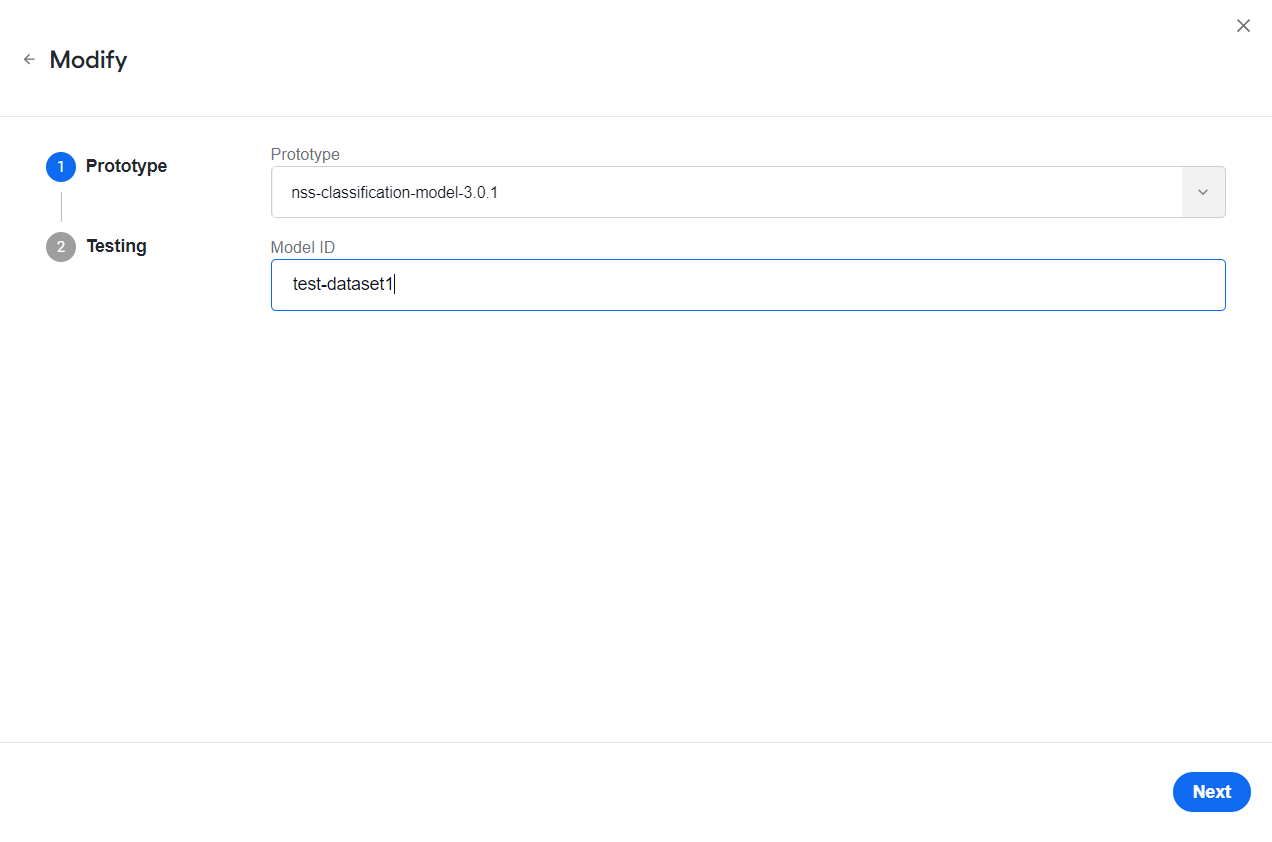
In the Prototype step, in the Model ID field, specify a new Model ID and click Next.
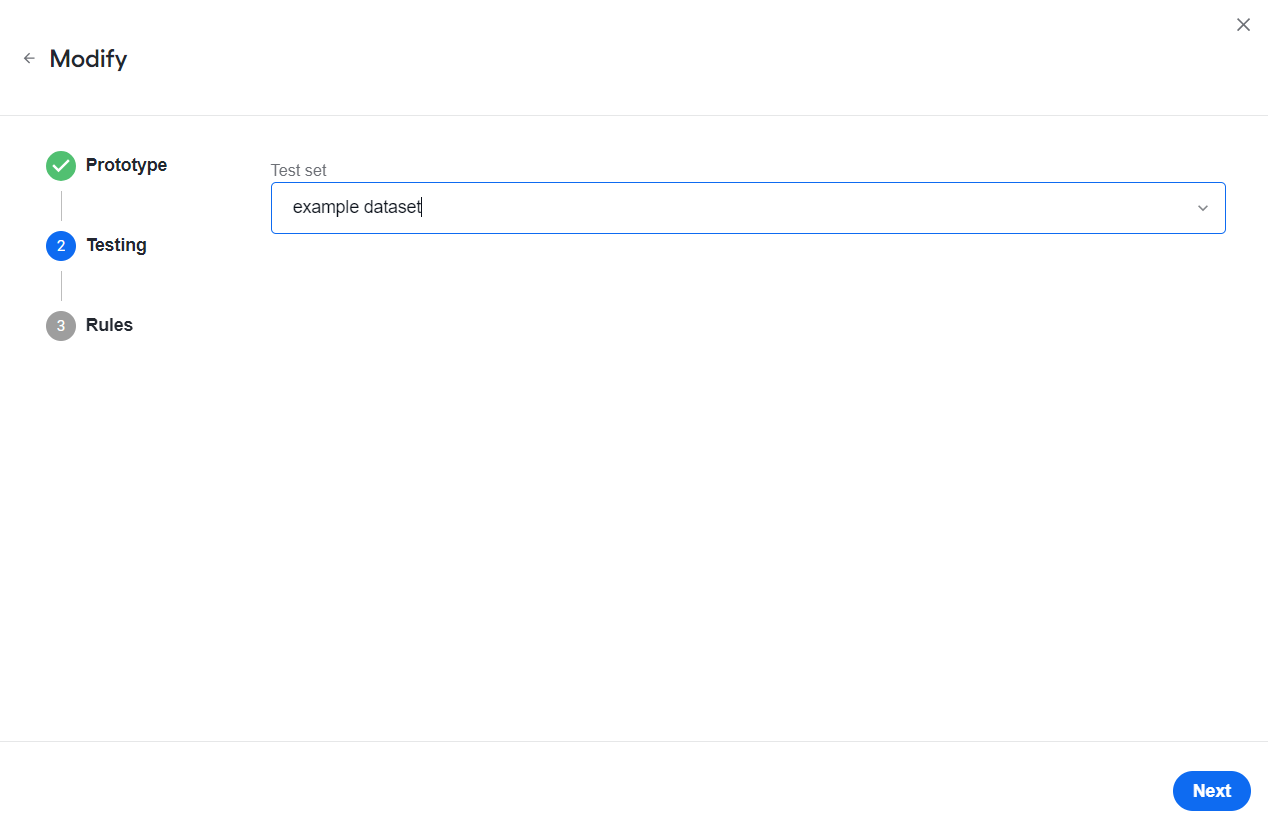
In the Testing step, choose the dataset you created and click Next.
In the Rules step, set up the model's rules.
- Rules
- Thresholds
- Stopwords
You can define rules based on the Name, Location, Date, Type, Gender by selecting appropriate fields. For the default configuration, see Rules.
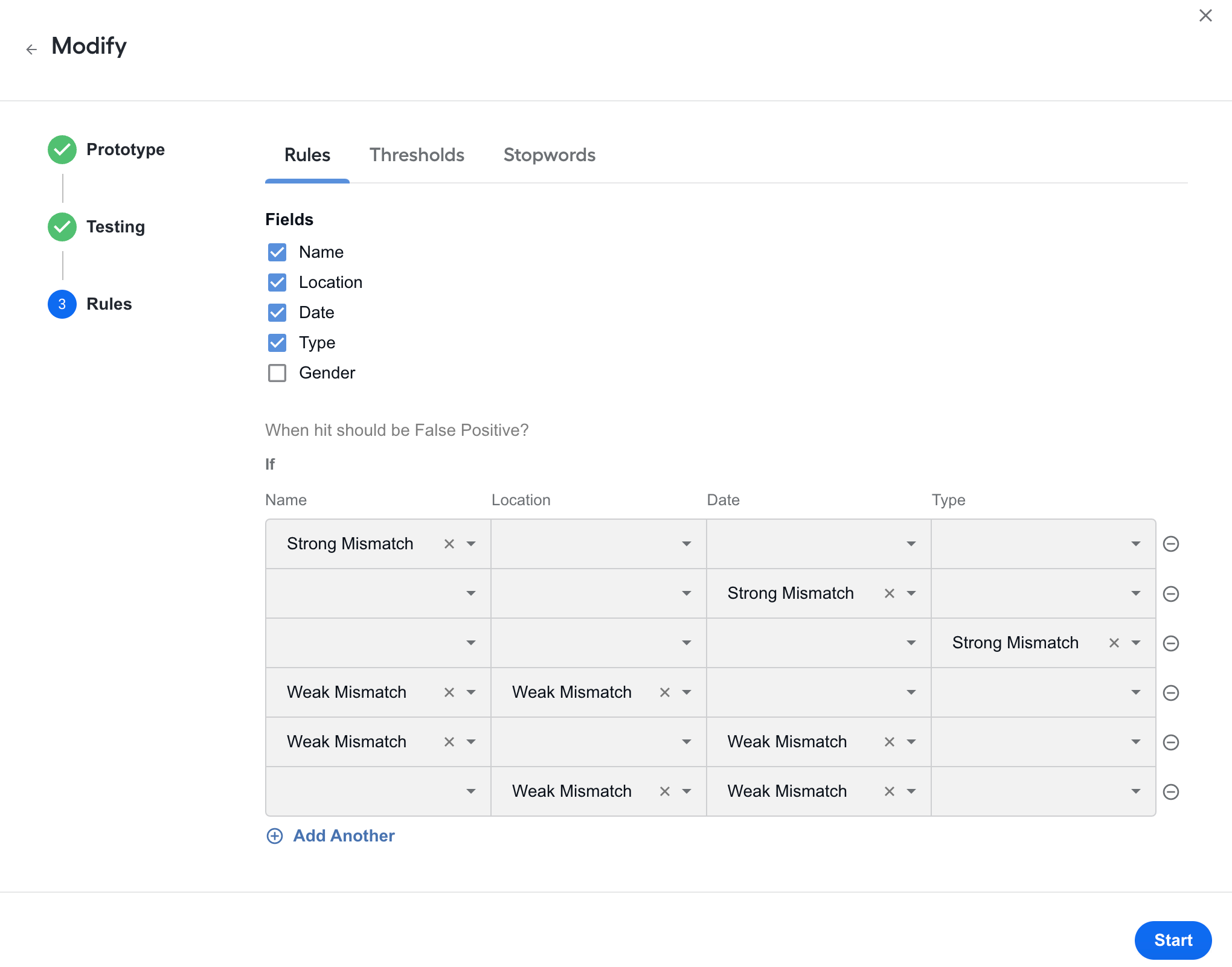
Empty values in rules are allowed. If only one factor is required to make a False Positive decision, no need to select others.
To add a new field, first, remove all existing rules.
You can define thresholds based on Name, Date, and Location. For default threshold settings, refer to Thresholds.
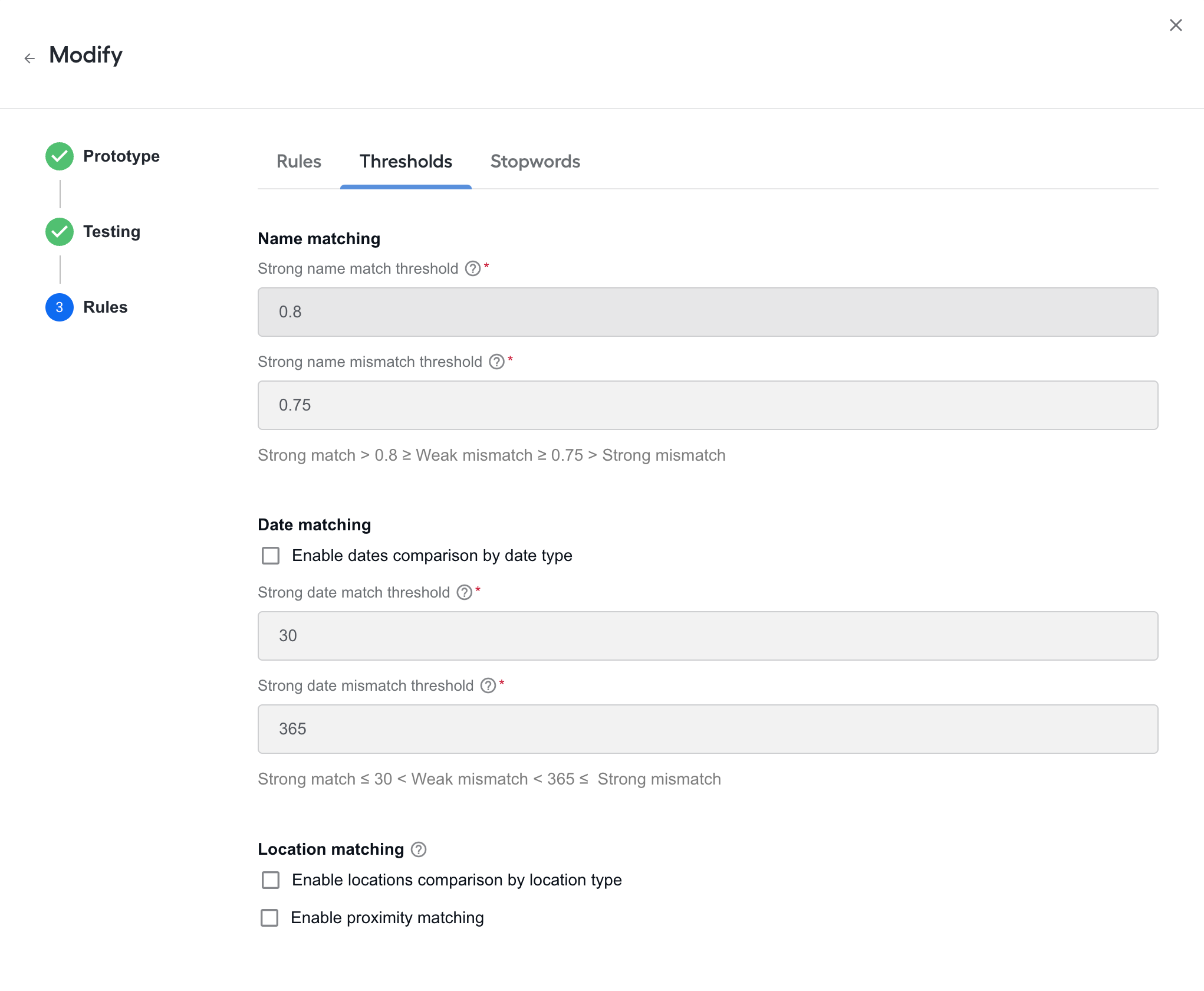
Strong name match threshold: NSS considers a name to be a strong match if it is similar to a screened entity, at least to the defined value.
Strong name mismatch threshold: NSS considers a name to be a strong mismatch if it is different from a screened entity, at least to the defined value.
Strong date match threshold. The value represents the maximum allowed difference in days between two dates to be considered a strong match.
Strong date mismatch threshold. The value represents the minimum allowed difference in days between two dates to be considered a strong mismatch.
- If both dates are provided in the
MM/dd/YYYYformat and the number of days between them is less than or equal to the configured threshold, the dates are considered a match or a mismatch based on the strong match or mismatch settings. - If at least one of the dates is not in the
MM/dd/YYYYformat, the dates are considered a match regardless of the day difference.
- If both dates are provided in the
Enable dates comparison by date type
Enable locations comparison by location type
Enable proximity matching
Enter stopwords in the relevant input fields, separating them by commas, spaces, or line breaks, depending on the specified input format. You can add and remove stopwords in the following categories:
- Geographical
- Financial
- Company
- Miscellaneous
- Client specific
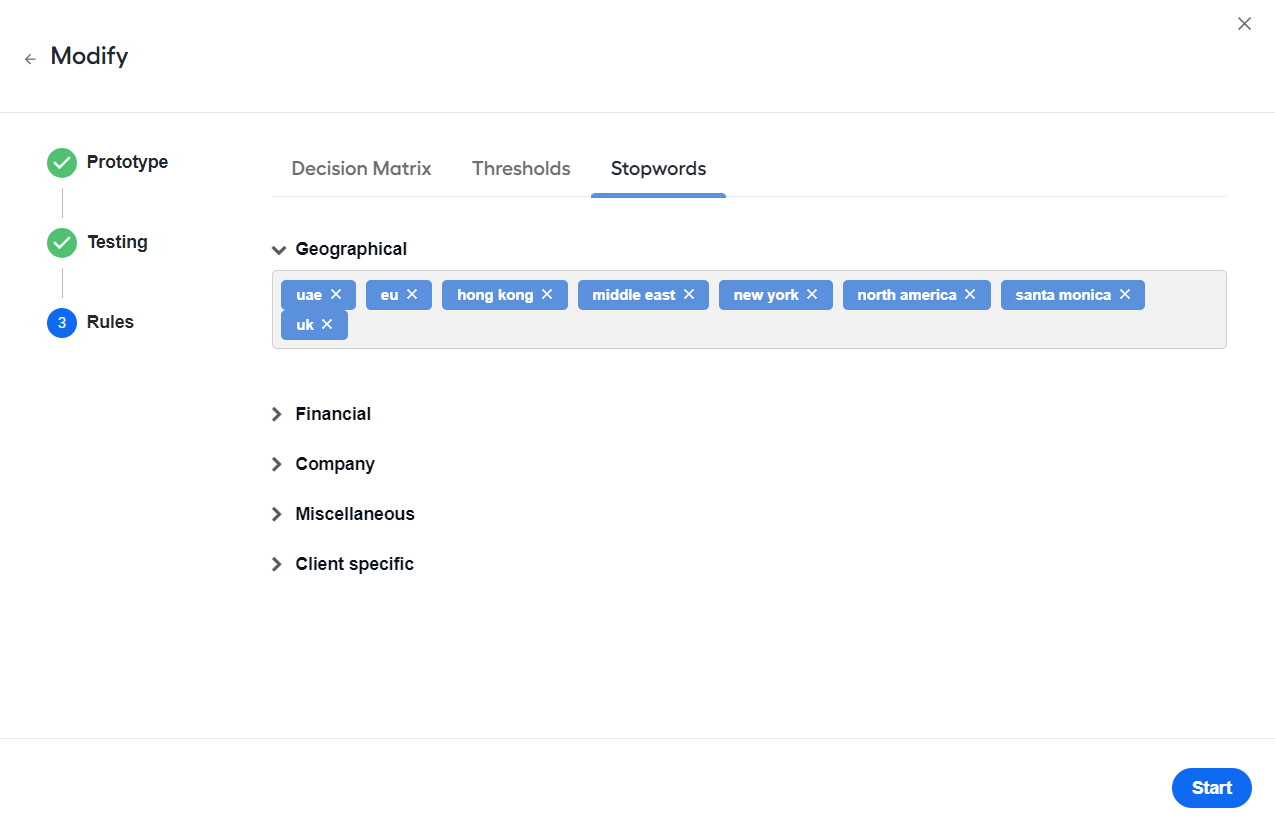
Consider the specific domain and context of your classification task when selecting stopwords. Mind that adding or removing stopwords can significantly affect the performance of the NSS Classification Model.
Click Start.
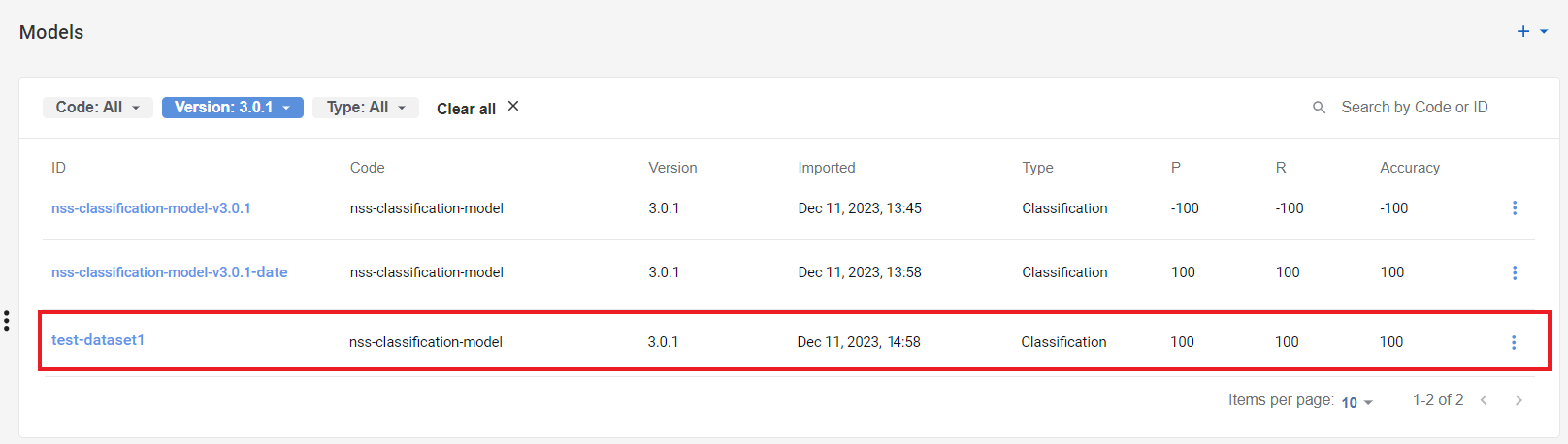
In AutoML > Models, check that the new model is created.
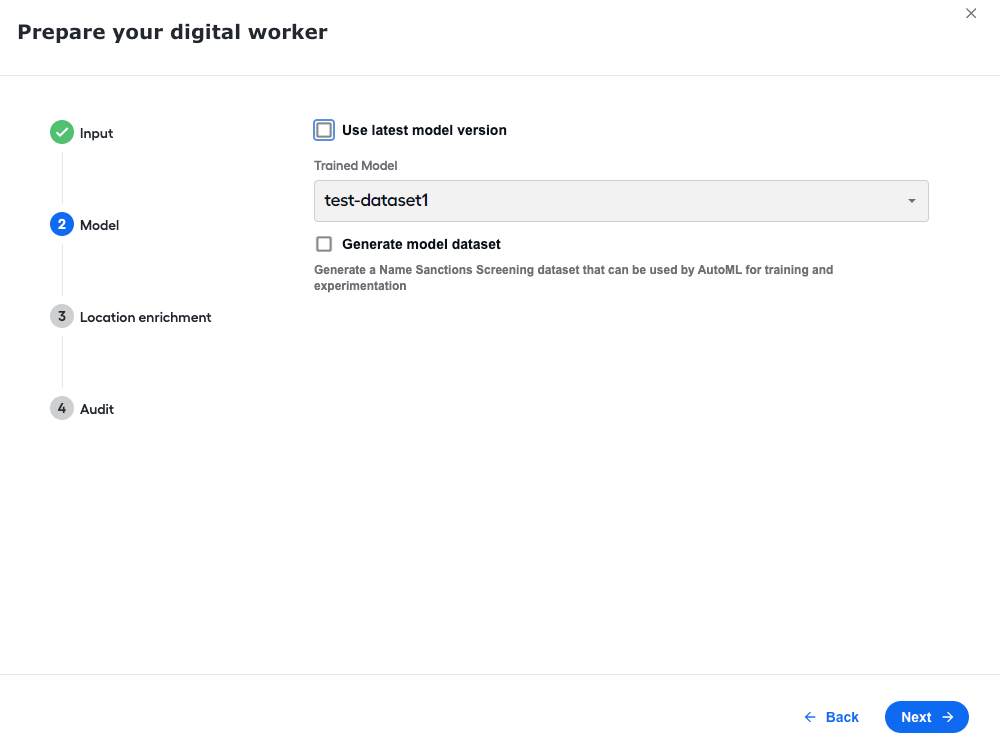
Go to the NSS configuration screen. On the Model step, in the Trained Model field, choose the newly created model for your Business Process.
Model narrative
If the model's final decision is False Positive, the narrative includes only those rule factors that actually triggered the model to take a specific decision. For instance, let's assume that the rule setup on the configuration screen is as follows:
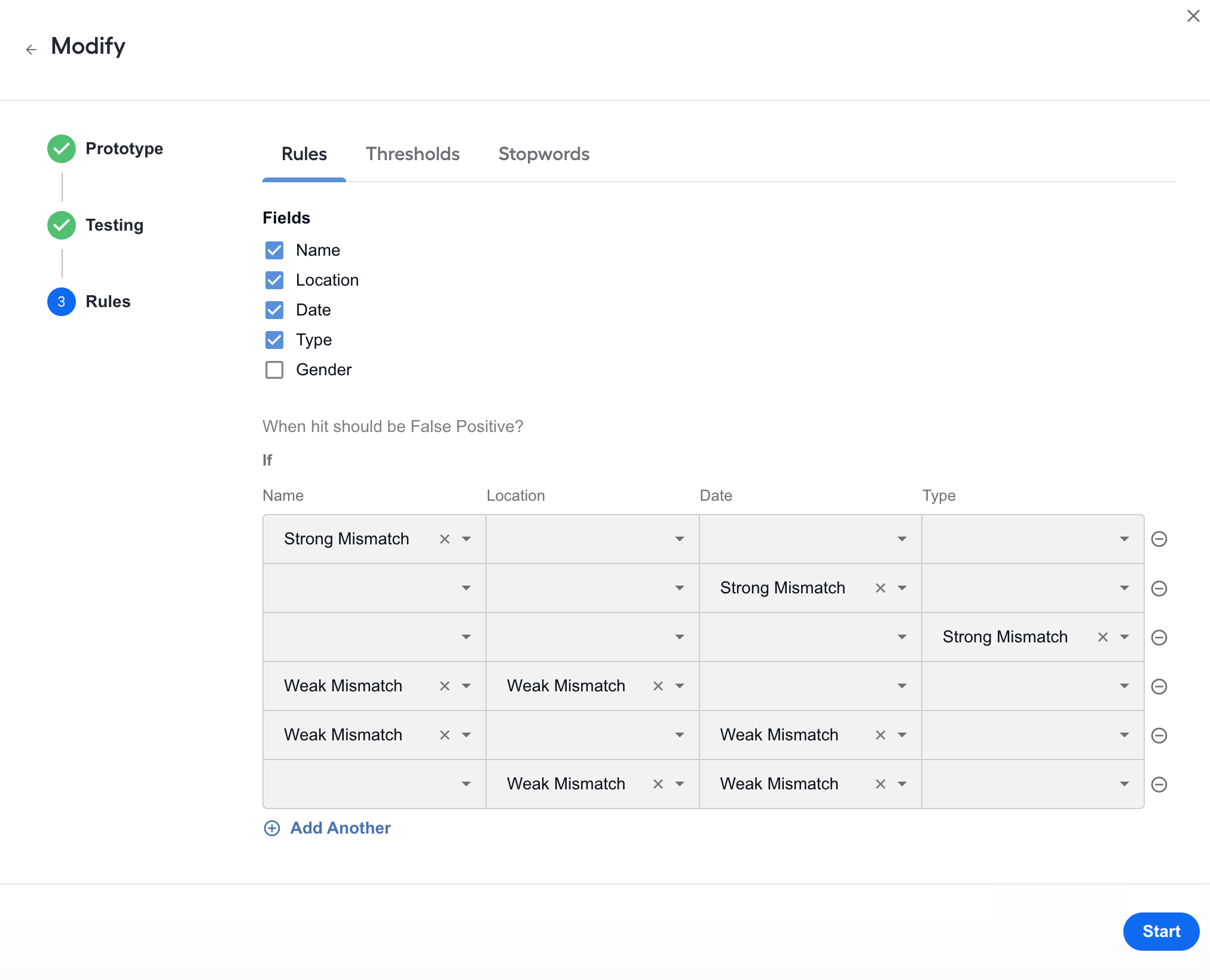
If the model's False Positive decision is triggered based on the value in the first row, the following lines appear in the model narrative:
False Positive.
Strong name mismatch (“{input_name}“, “{wle_name}“).
If the model's final decision is Need more information, the narrative contains one Strong match and Week mismatch factors (if any):
Please review manually. Not enough information to disposition.
Strong name match (“{input_name}“, “{wle_name}“).