Configure Classification Model Rules
Classification Model Rules define how the Model processes a hit. When a name is run against hit providers, they return the hit data. Based on the configured rules and threshold, each hit is given a 'hit score', which determines whether it should be treated as False Positive or escalated.
Rules
Use rules in the NSS Classification Model to determine if a hit should be marked False Positive. Rules require the following fields:
Name: Name of an individual or organization.
Location: Country of present and past affiliation, ownership, or citizenship.
Date: Date and year of birth for individual, or Date and Year of foundation for organizations.
Type: Hit type: Individual (PERSON) or organization (ENTITY).
Gender: Gender of the individual.
If a field in the hit data provided by providers matches the input data, the Model marks it as 'Matched'. Otherwise, the field is marked 'Mismatched'. The Model marks it as 'Not Available' if no data is provided on either side.
Thresholds
For each hit, the Model provides a 'hit score'. You can define thresholds on the minimum hit score needed to escalate a hit.
You can also define thresholds on the Location and Date fields to include neighboring countries and their respective types.
Default Model Configuration
You can define rules based on the Name, Date, and Location fields by default.
Decision Matrix
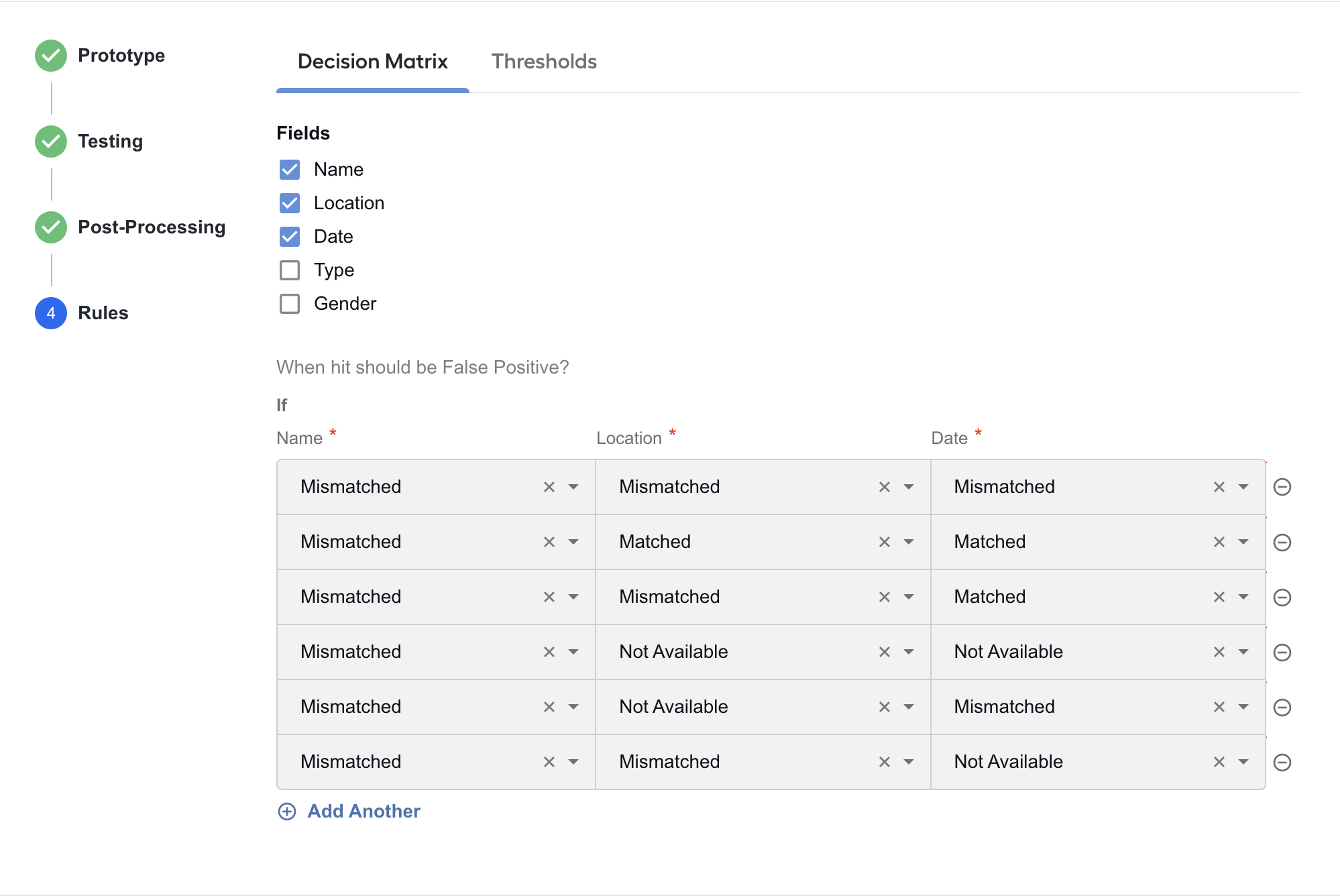
The decision matrix below describes the default rule configuration of the NSS Classification Model, in which a hit is marked as False Positive. For all other cases, the hit will be escalated for further review.
| Name | Location | Date | Resolution |
|---|---|---|---|
| Mismatched | Mismatched | Mismatched | False Positive |
| Mismatched | Matched | Matched | False Positive |
| Mismatched | Mismatched | Matched | False Positive |
| Mismatched | Not Available | Not Available | False Positive |
| Mismatched | Not Available | Mismatched | False Positive |
| Mismatched | Mismatched | Not Available | False Positive |
Default Threshold
The threshold for Name similarity is 0.8.
Tuning Model
To fine-tune the Model, perform the following steps:
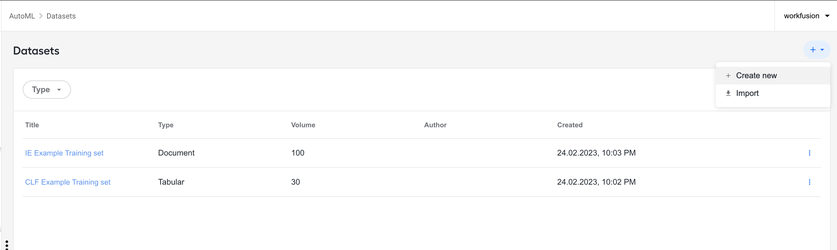
In Control Tower, go to AutoML > Datasets, and create an empty dataset.
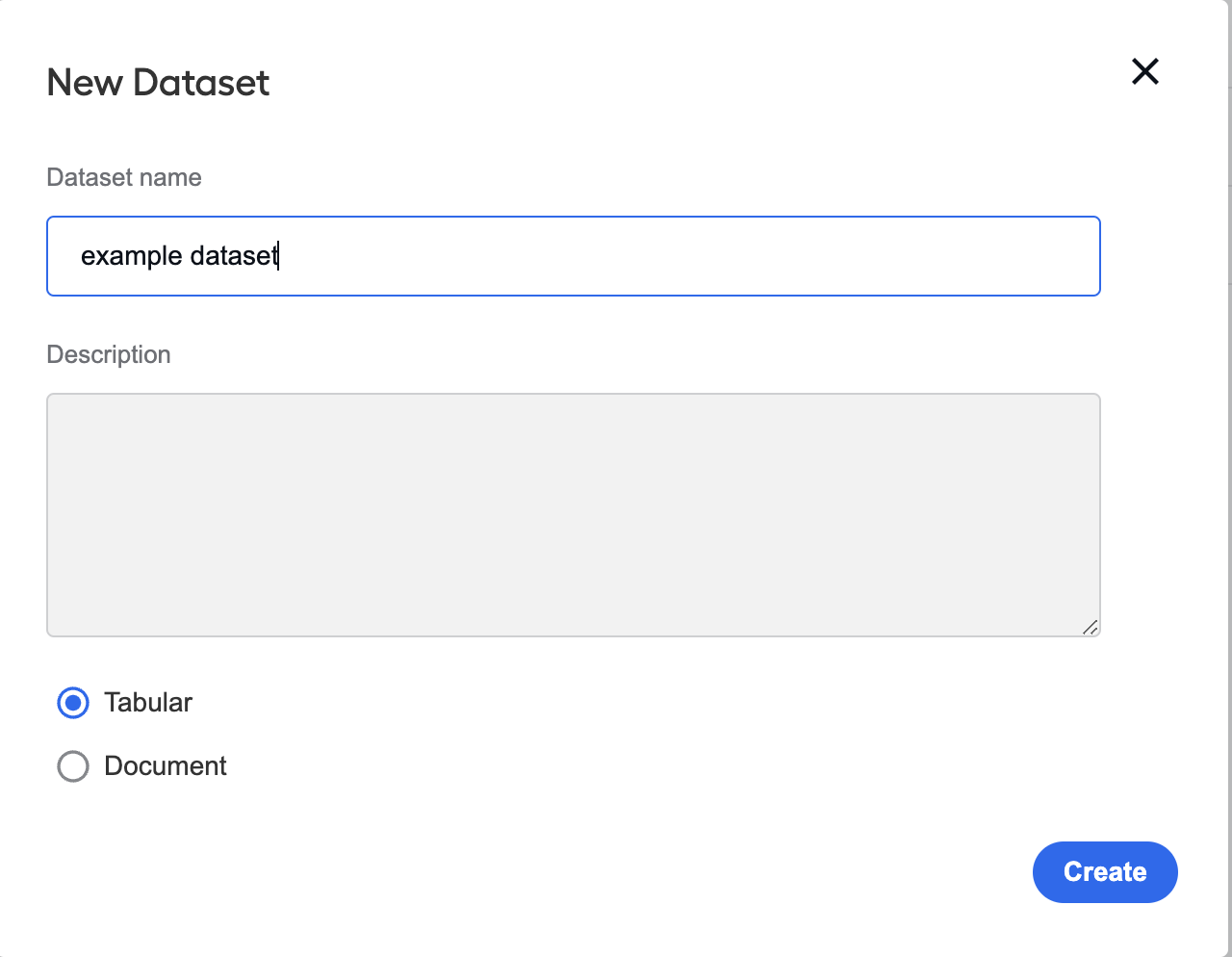
Name the new dataset and choose the type Tabular.
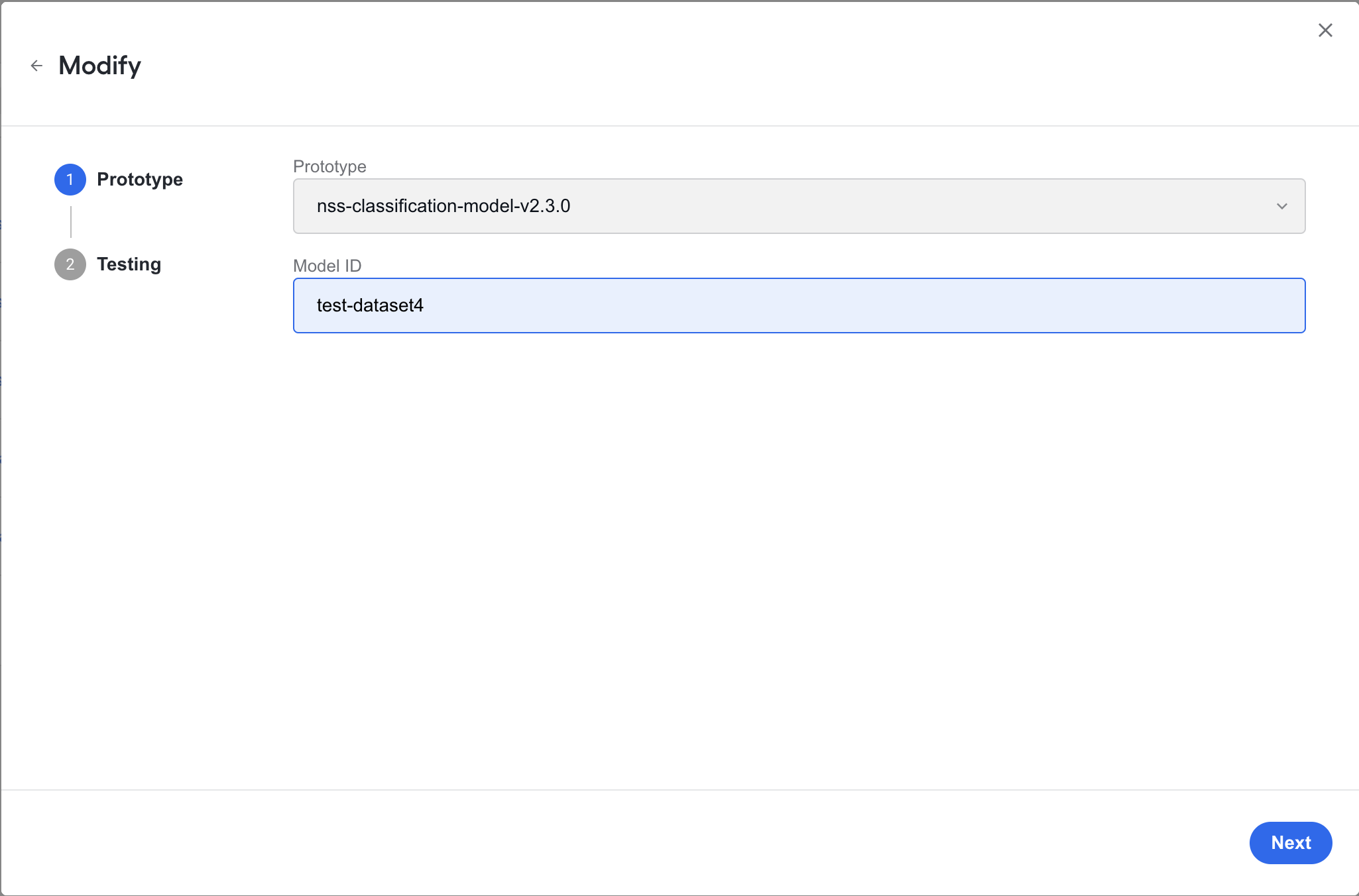
Go to AutoML > Models, choose a version 2.3.x NSS Model, and click Copy to modify.

In the Model ID field, specify a new Model ID and click Next.
Choose the Example dataset that you created on step 1, and click Next.
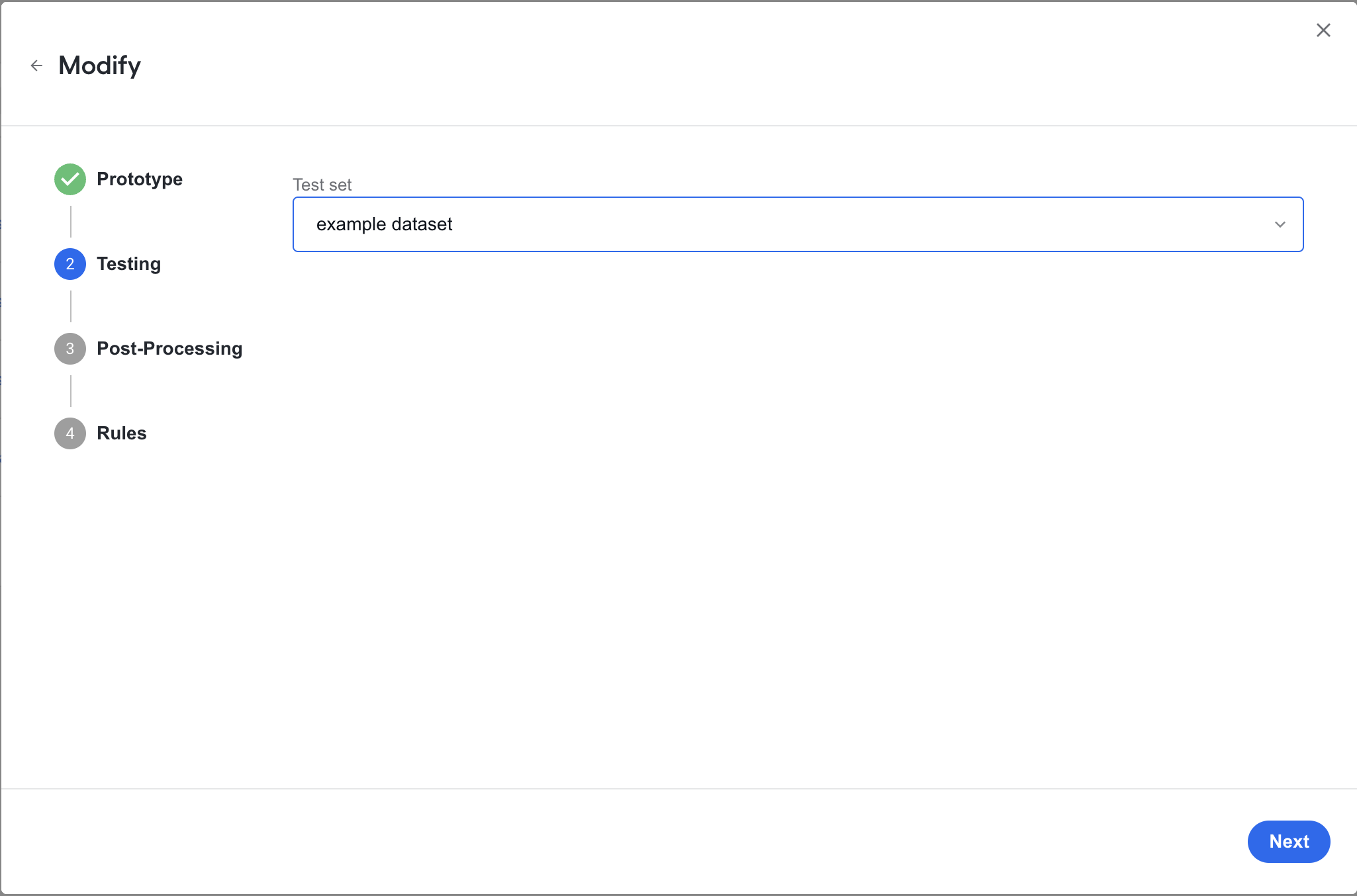
In the Post-Processing step, do not modify any settings and proceed to the next step.
In the Rules step, verify and change the Rules' decision matrix and thresholds.
noteTo add a new field, first, remove all existing rules.
Click Start.
In AutoML > Models, check that the new Model is created.
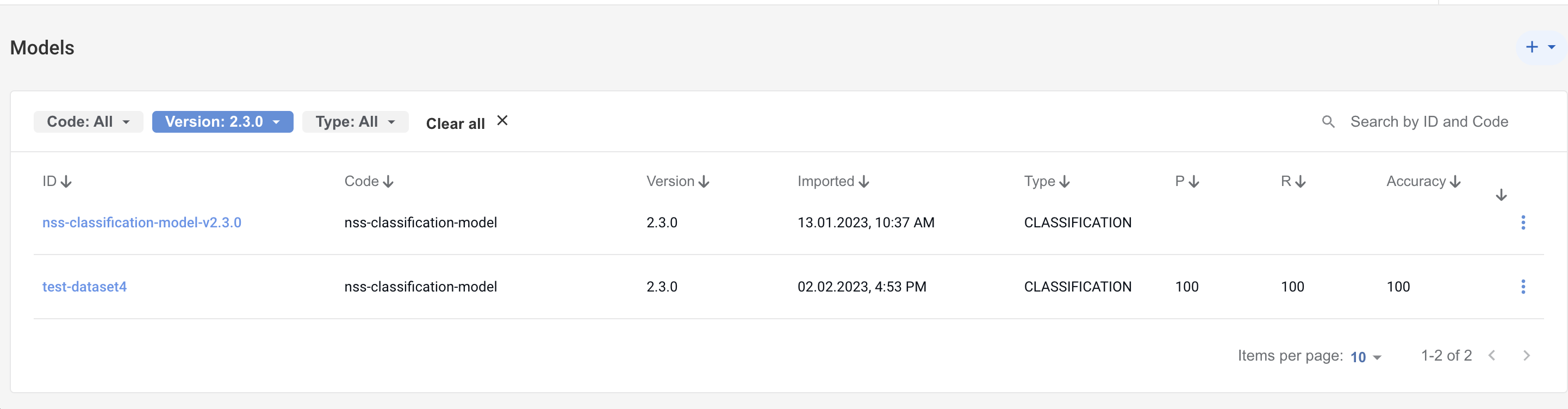
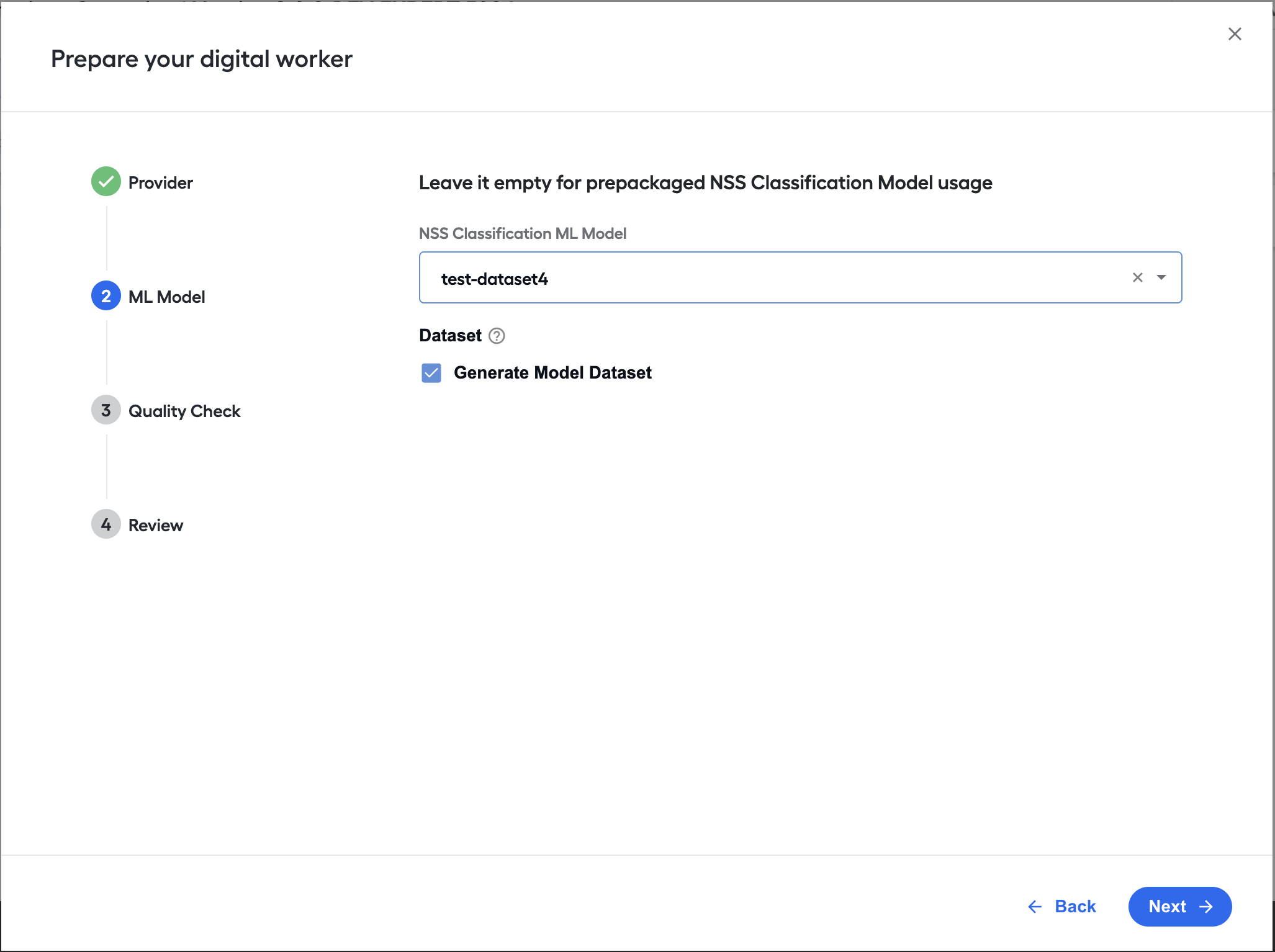
Go to NSS skill settings, and in the ML Model step, in the NSS Classification ML Model box, choose the newly created Model to run your Business Process.