Work with fleets
The fleet mechanism is designed to send tasks for processing by a dedicated Worker pool, or fleet.
You can apply the fleet functionality to RPA steps only. Fleets are used to assign RPA tasks to specific RPA nodes. For more details, see Task distribution.
For the legacy RPA fleet configuration using the fleet attribute in the XML configuration of the RPA plugin, see Robotics plugins. If both a Bot Source fleet and the legacy attribute are present, the Bot Source settings have priority.
To configure and update fleets, go to System Settings > Bot Sources.
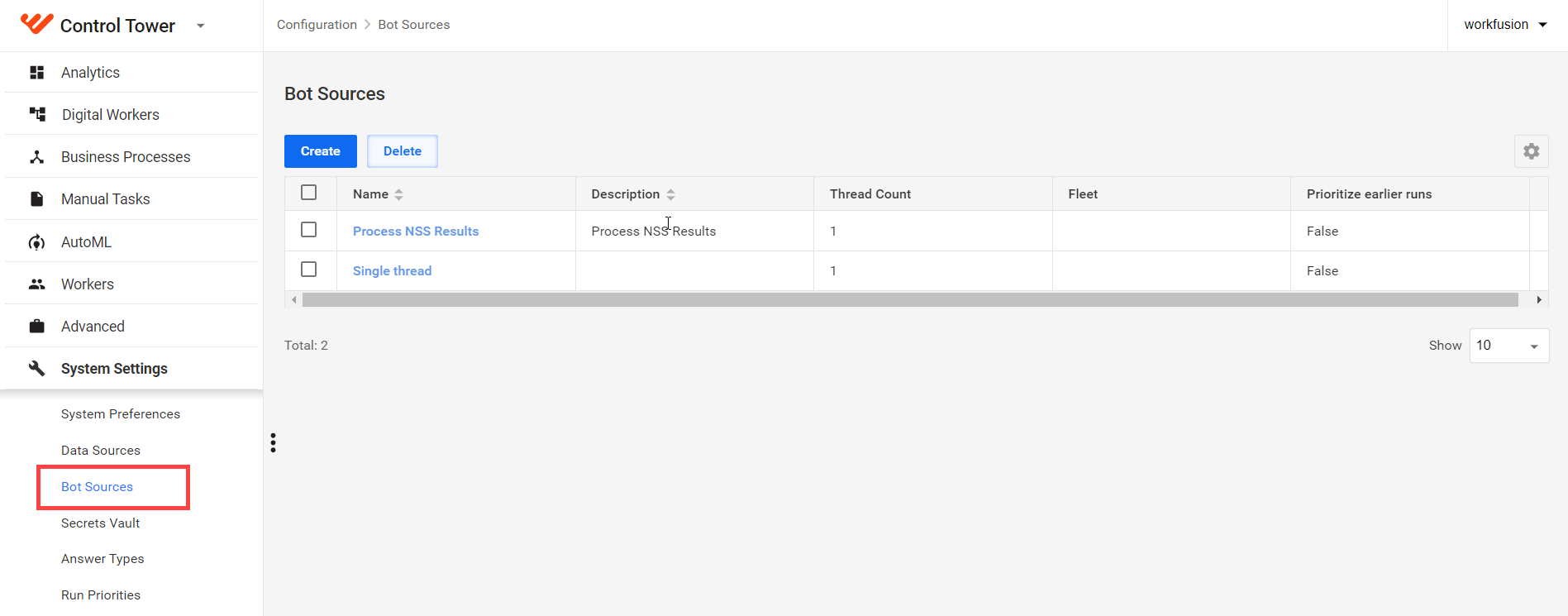
Set fleet
To set a fleet for a Bot Source, do as follows:
Click the Create button to add a new Bot Source or select an existing Bot Source from the list.
In the the Fleet drop-down list, select a fleet from available configured RPA fleets.
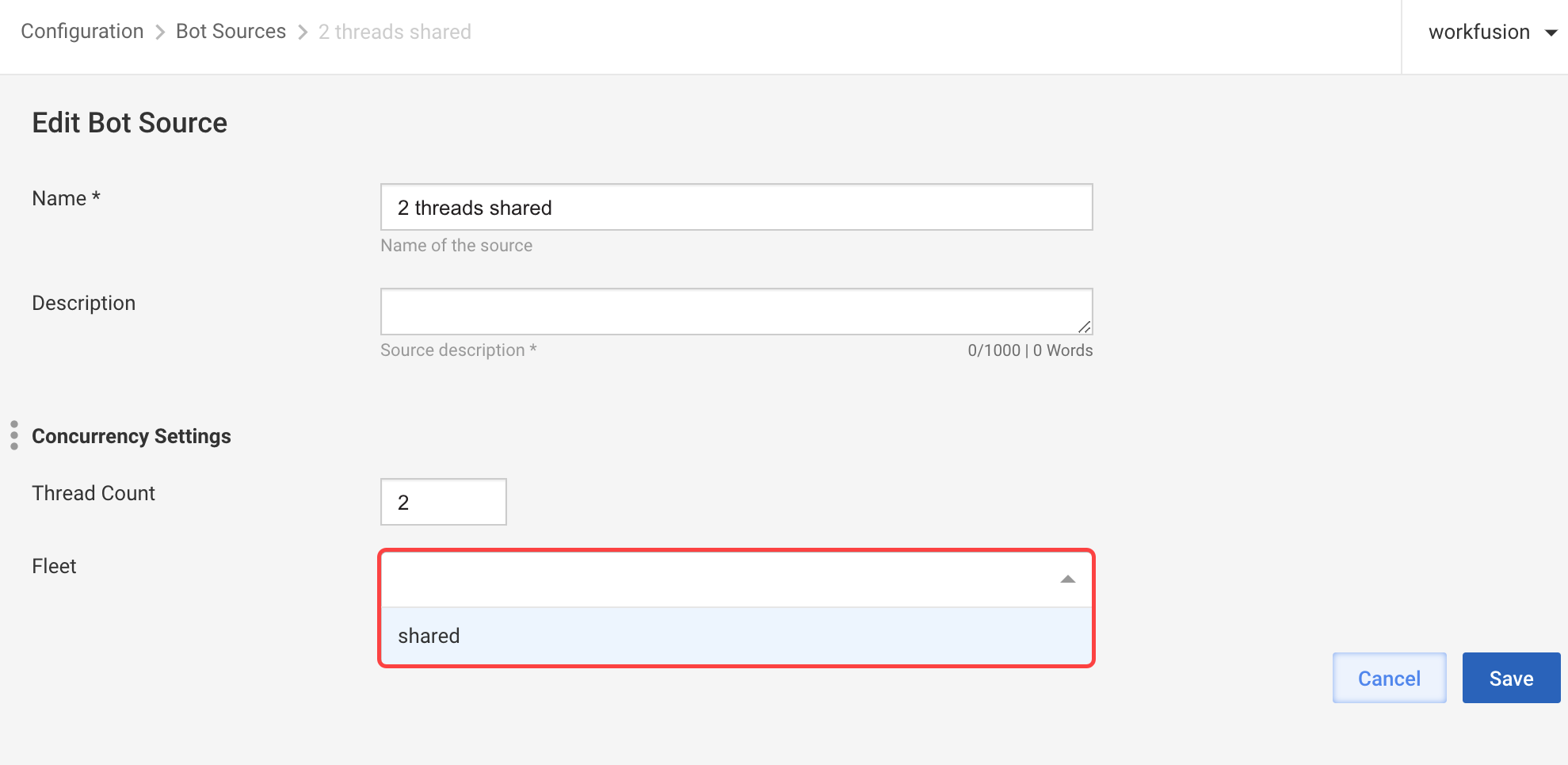 caution
Remove the default value in the Thread count field, if you do not need to limit the concurrent task execution. Use the thread count functionality with caution. Mind that limiting the thread count decreases performance for bot steps working with a Bot Source and leads to significant system overhead.
Click Save.
Update fleet and thread count
If you change a fleet or thread count for an existing Bot Source used in an active Business Process (BP), the changes are applied to new BP runs only. In this case, you see the following warning message:
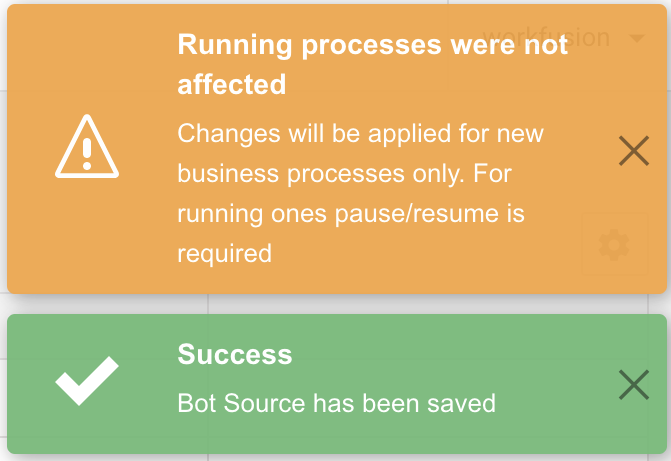
To apply a new fleet or thread count to currently running tasks, pause and resume the related BP.
Validate fleet
If you try to run a BP that contains RPA bot tasks with non-existing fleets, the tasks will fail after the waiting timeout is expired (by default, one hour). In this case, you get the following error message in the event log:
com.workfusion.spa.core.execution.api.task.GenericTaskFailedException: There is no workers listening 'exec...com.worker.com.workfusion.spa.ct.worker-app.10.3.0.14.rpa.' queue for a long time. Task was exceeded wait limit and rejected.
If you save a BP with non-existing fleets on the BP Workflow tab, you see the following error message:
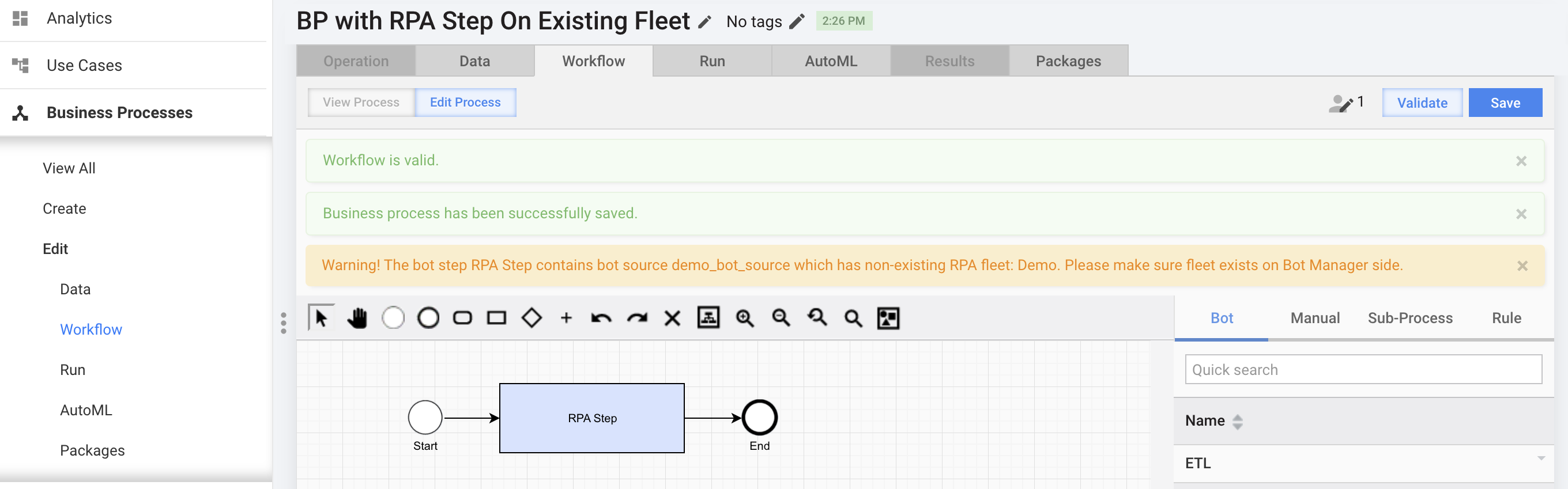
Apply Bot Source to bot step
To apply a fleet to an RPA step, assign the appropriate Bot Source to the step during its configuration.
Each bot step can have its link to a Bot Source. As you see in the diagram below, Bot Step 2 and Bot Step 2 Duplicate are created from Bot Config 2, but Bot Step 2 Duplicate has its own Bot Source.
Thus, you can independently set Bot Sources on the bot step level. For example, if you have several bot steps created from a single Bot Configuration, each bot step can have its own Bot Source. When you add a bot step to the BP workflow using the drag-and-drop action, the Bot Source is inherited from the Bot Configuration.
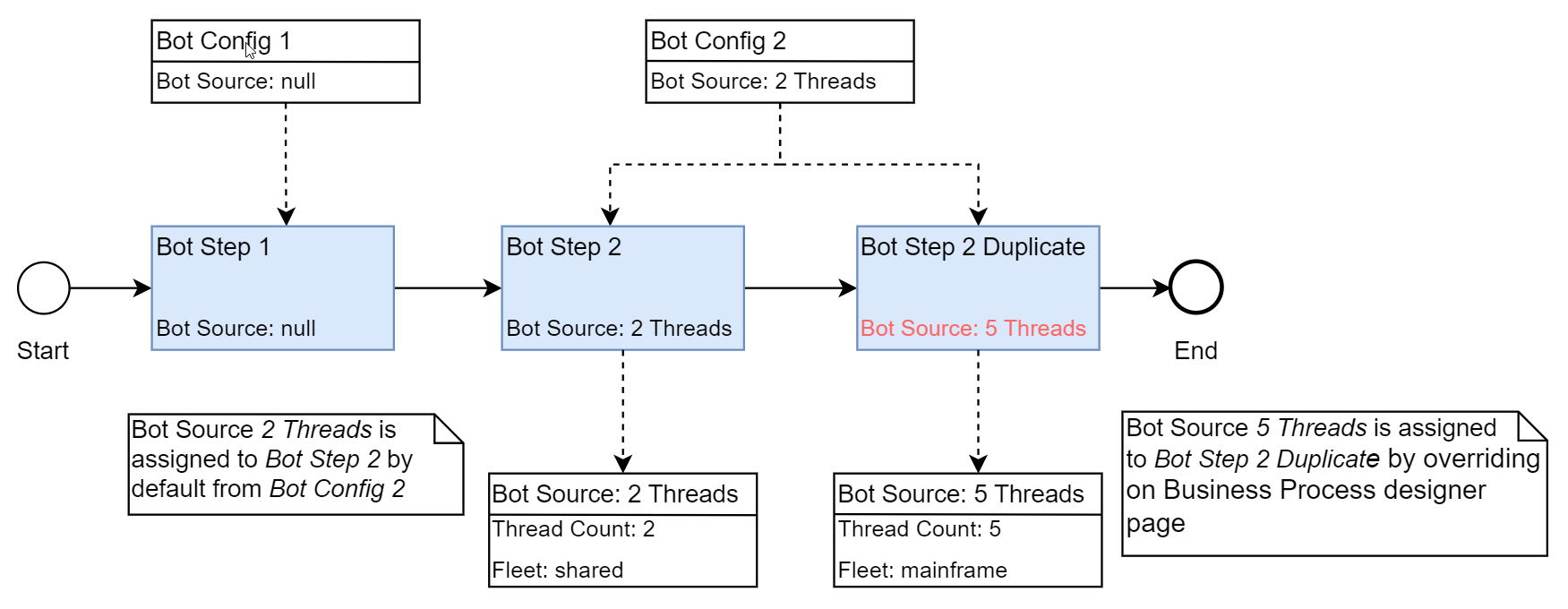
See several scenarios explaining how to apply a Bot Source to a bot step.
Case 1: Add new bot configuration to BP
To apply a Bot Source to a bot step, do as follows:
On the BP Workflow tab, add a bot step in one of the following ways:
- Drag and drop a bot step from the Bot tab on the side panel to the canvas.
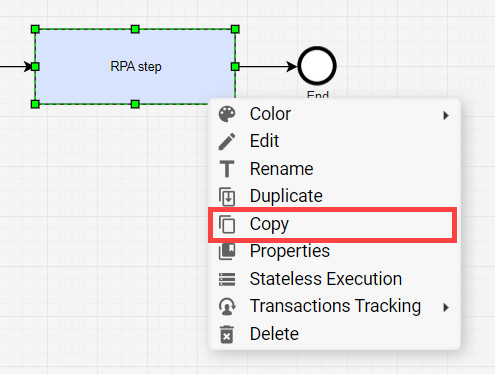
- Copy an existing bot step. Right-click the step and select Copy.
- Create a new bot step and Bot Configuration by dragging the Bot Task element from the toolbar.

Connect the bot step with other steps as needed.
Click Save to save the BP.
Double-click the bot step to which you want to assign a Bot Source.
In the Bot step configuration menu, on the Design tab, select a Bot Source in the Bot Source drop-down list.
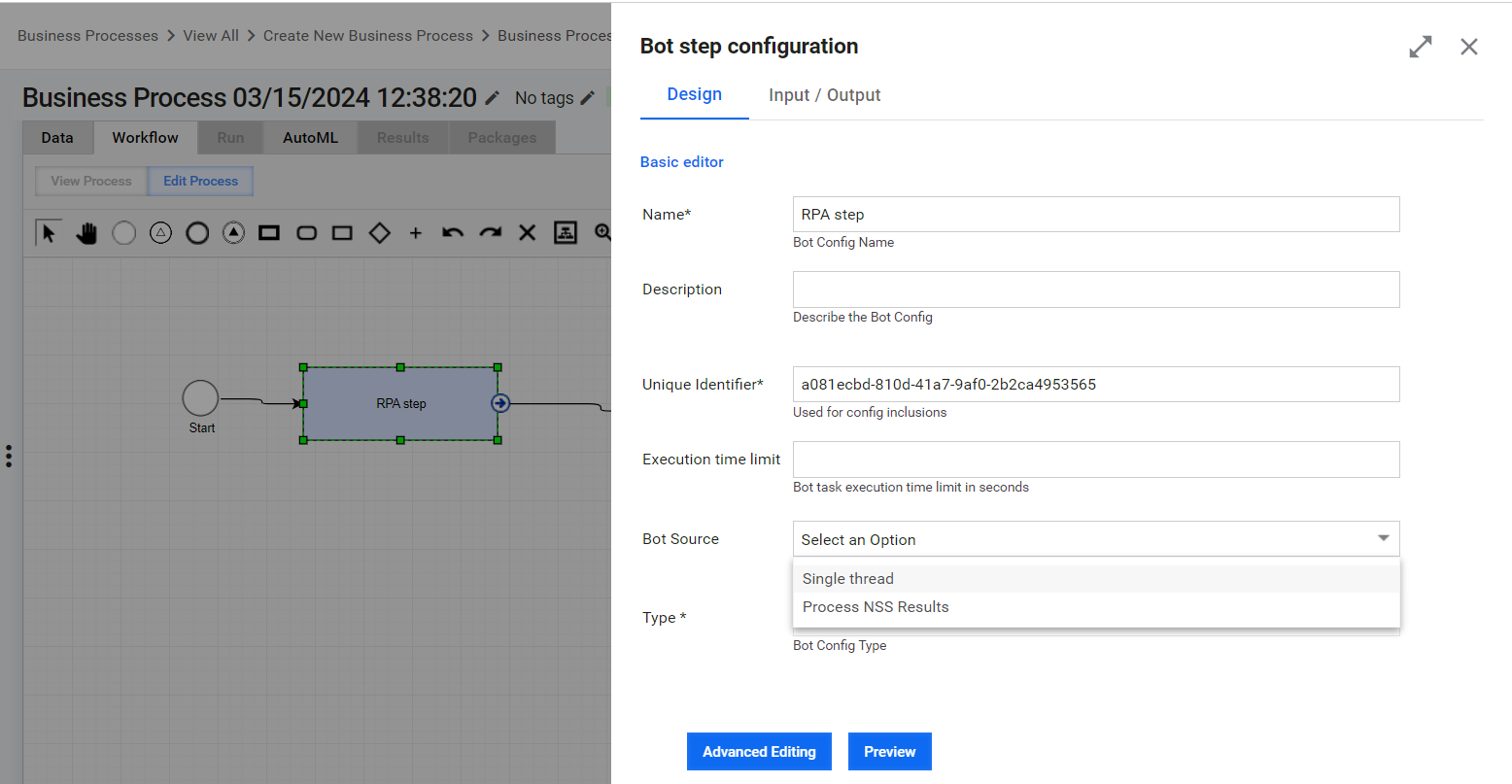
Click Save to save the Bot Configuration.
Save the BP.
Case 2: Edit existing Bot Configuration
To apply a Bot Source to a bot step when editing an existing bot configuration, perform the following steps:
- On the BP Workflow tab, double-click the bot step to which you want to assign a Bot Source.
- In the Bot step configuration menu, on the Design tab, select a Bot Source in the Bot Source drop-down list.
- Click Save to save the Bot Configuration.
- Save the BP.