
What can AutoML do?
AutoML is a complex technology and thus requires a deep understanding of core concepts behind machine learning and automation.
IA Cloud recognizes two main types of use cases where AutoML can be applied effectively. Thus, cognitive automation is delivered for business workflows that include Information Extraction and Classification.
Cognitive Automation
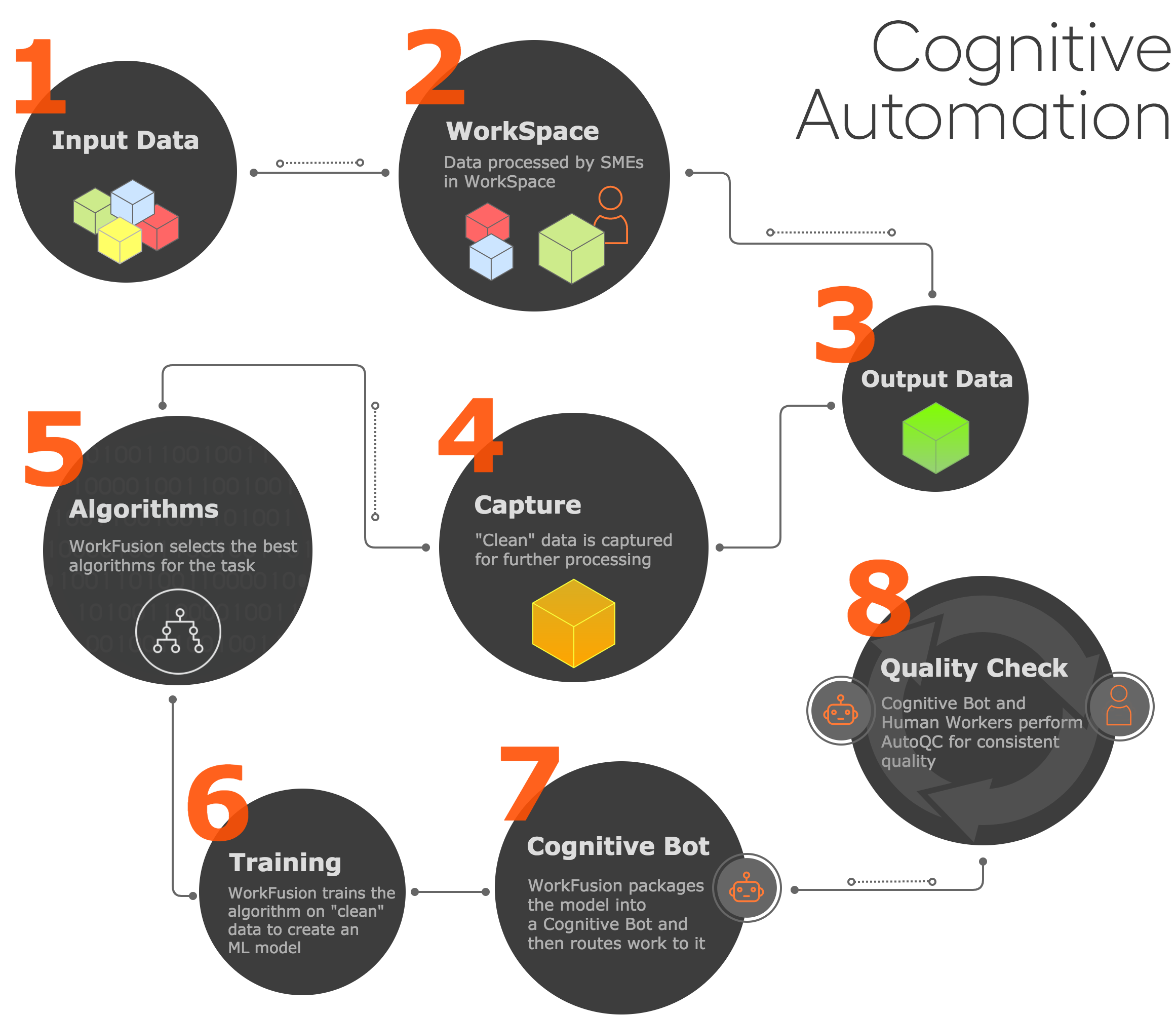
AutoML allows you to automate at scale and deliver continuously to production without a Data Scientist in a team. Here's a quick visualization of the Cognitive Automation flow.
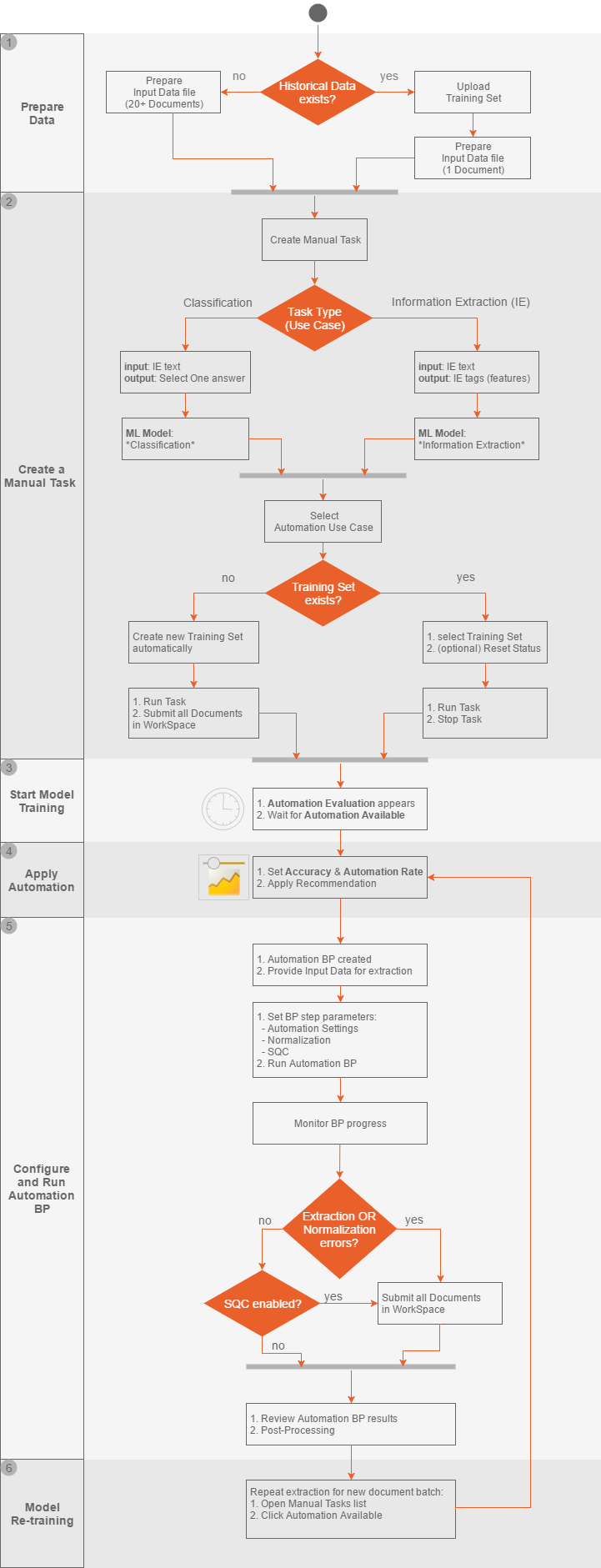
The diagram below explains the overall Cognitive Automation workflow step by step:
Typical Use Cases
IA Cloud is used for but not limited to the following use cases:
- Information Extraction is a process of extracting structured information (or key facts) from unstructured or semi-structured documents.
- Classification is arrangement in groups or categories according to established criteria. Both binary and multi-class are supported.
Information Extraction
An Information Extraction (IE) use case is used when data defined by business logic is taken out (extracted) from documents and processed according to business rules. In terms of Information Extraction, each use case data point is referred to as a "field". For example, invoice number, supplier name, and quantity of products have to be extracted from all invoices. It means the use case has three fields to be extracted from documents—invoice number, supplier name and quantity.
Classification
A Classification use case is applied when it is necessary to define the class for an item (document). Classes stand for different document types. For example invoices, purchase orders and claims are processed in one workflow, and each document type is handled differently. That means you need to classify these documents first before applying automation.
Solutions
The following video covers typical use cases automated in Insurance, Healthcare, Financial Services, and other sectors. It describes addressed problems and how they are solved using the platform and the outcomes.
For more in-depth information, refer to ML basics.