
Data Analyst introduction
Data Analyst manual is an advanced guide developed to teach the Data Analyst role for projects which use WorkFusion Machine Learning capabilities. Its goal is to give an end-to-end understanding of the qualitative ML Training Set collection. This guide teaches best practices and WorkFusion Center of Excellence (CoE)-approved delivery methods.
In general, data analysis is a process of inspecting, cleansing, transforming and modeling data with the goal of discovering useful information, informing conclusions and supporting decision-making. Data analysis has multiple facets and approaches, encompassing diverse techniques under a variety of names, while being used in different business, science, and social science domains.
What does a Data Analyst do?
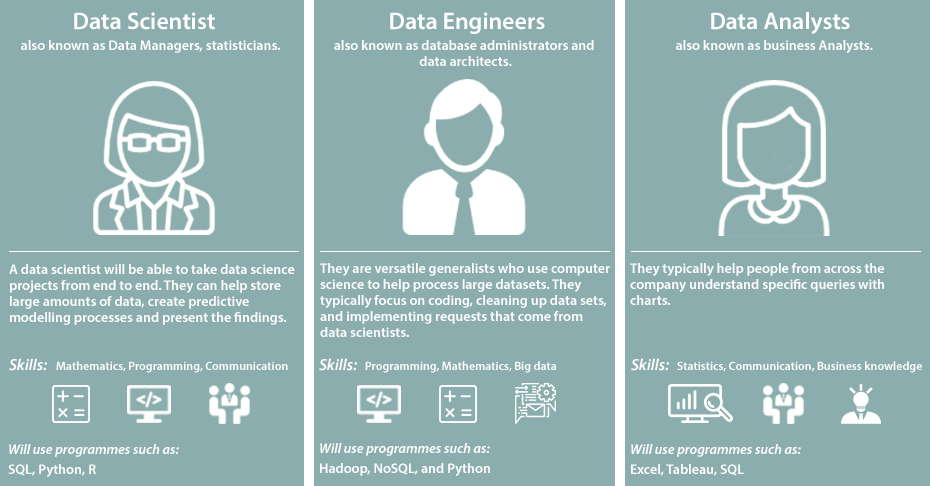
Data analysts are responsible for identifying and extracting valuable information from structured and unstructured data to explain business performance. Using this information they identify the best analytical models to present to business users and the best approaches to explain these models.
Data analysts were among the most prominent sources of data understanding in the era prior to the rise of data science. They are still relevant today due to their distinct role, and in some companies have a role that has transformed due to a combination of data science know-how and the need to integrate data scientists into the existing business data framework of that company.
The primary role of the data analyst is to take questions or problems supplied by the business team and come up with solutions to them. Unlike data scientists, you will not be creating many predictive models, but instead you will be diving deep into data, finding new and innovative ways to turn it into something that is either directly actionable or can be used as the basis for the company or unit’s larger strategy.
You will be required to become an expert in how either the business as a whole or your particular unit operate, depending on the scale of the company. Being effective in your position will require you to be able to take the data-driven insights you acquire and turn them into something that is directly relevant to your business. As an effective data analyst you will end up understanding the nuts and bolts of how your company operates in a way that few other will be able to match.
One thing to be aware of is that due to some level ambiguity during a time of rapid expansion in data science, some positions for data analysts may be referred to as data scientists and vice versa.
Data Analyst for WorkFusion projects
Is a dedicated role during the delivery of automation projects which include unstructured data processing. A person with DA skills will be in charge of appropriate documents selection, processing, structure and input for model training. Because the overall success of an ML implementation highly depends on quality of input, this role is crucial. From a technical perspective, a DA is not expected to possess coding skills, but instead must have deep knowledge and practical skills of work with data.
As for prerequisite education, we've found that the following subjects are beneficial toward developing a career in data analysis:
- Mathematics
- Computer science
- Statistics
- Economics
There are also a number of qualities to expect from a Data Analyst role:
- Experience in data models and reporting packages
- Ability to analyze large data sets
- Ability to write comprehensive reports
- Strong verbal and written communication skills
- An analytical mind and inclination for problem-solving
- Attention to detail and patience
What you need to know about becoming a Data Analyst
Data analysts typically require a bachelor’s degree, though some positions at larger companies or those with more rigorous expectations may demand a master’s degree. Degree programs are typically statistics, information technology, or a particularly statistically rigorous business degree.
Current data jobs landscape
Career development
There is lot of potential for growth for people who have the level of business and statistical knowledge that a data analyst possesses. There are two main paths for this growth, both of which will eventually require a master’s degree. If you are more interested in a management position, an MBA will allow you to combine your data know-how with management techniques and position you to gain a leadership position. If you want to go in an even more data-focused position, getting a master’s degree in computer science or statistics will put you in a good position to become a data scientist.
Either way, becoming a data analyst is worthwhile and rewarding, particularly if you have the knowledge required to be excel.