
Task distribution strategies
The purpose of Distribution Strategies is to decrease the RPA tasks execution time by minimizing queues and allocating tasks among hubs according to the certain logic.
The most advanced strategy implemented in RPA Manager is Least Loaded Selection Strategy. This strategy is the most recommended one for RPA Manager and provided as a default strategy.
Least Loaded Selection strategy
Least Loaded Selection strategy distributes tasks according to the following logic:
RPA Manager reviews hubs' load and selects a hub with the lowest load. Load is calculated by the following formula:
Load % = number of occupied drivers / total amount of drivers.note
RPA Manager does not check the occupation of specific drivers.
In case two or more hubs have the same lowest Load %, the hub with the earliest time of previous task distribution is selected.
You can find example on the picture below.
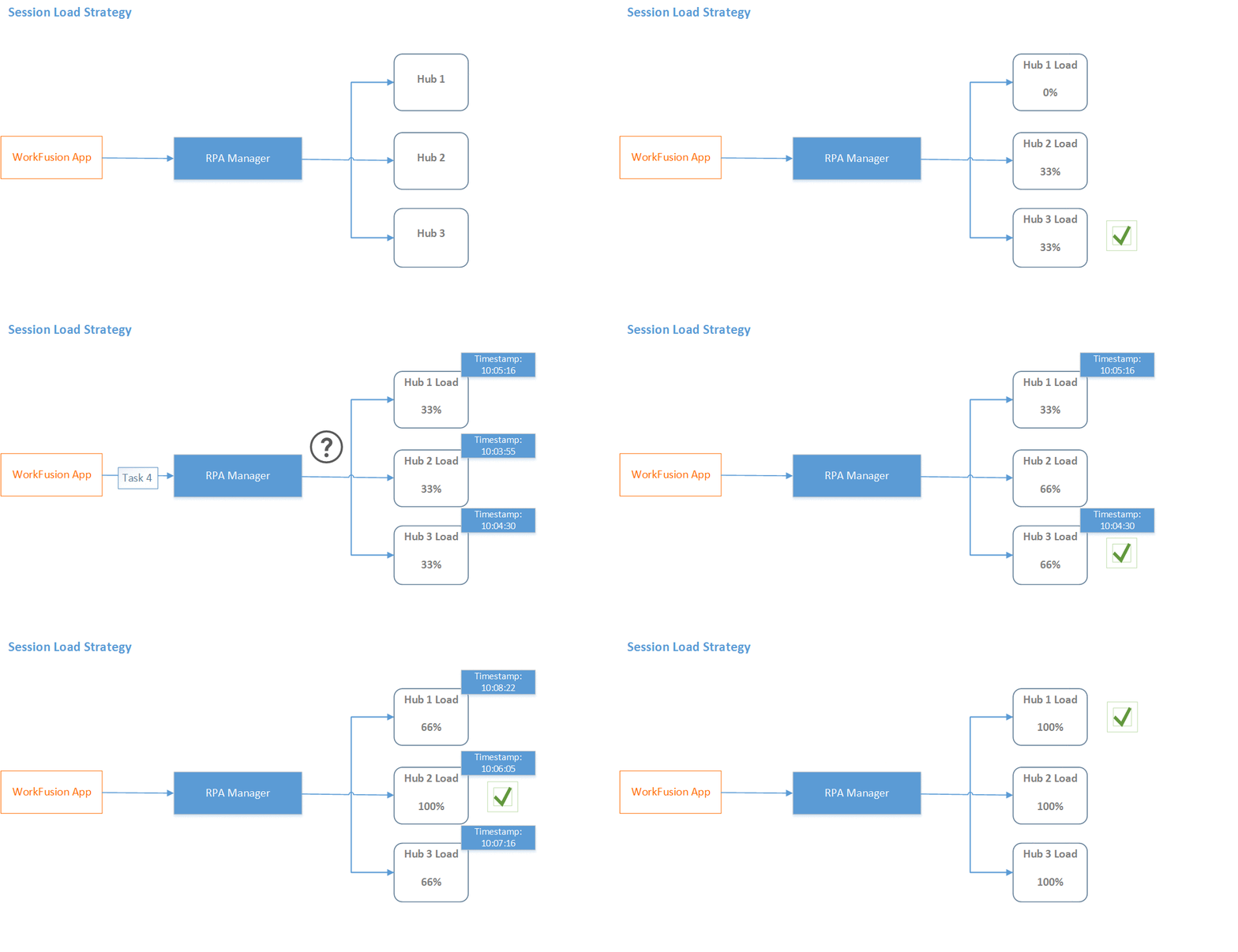
The main advantage of Least Loaded Selection Strategy is that the tasks are distributed taking into account the hub load along with the time of previous tasks distribution in order to utilize the least busy hub.
At the same time, a possible bottle neck of the strategy is the case, when a huge number of tasks should be distributed at once, then this strategy may potentially produce a queue on one hub.
In addition to Session Load Strategy RPA Manager has 4 other strategies:
Random strategy
According to random distribution strategy hub is randomly selected by RPA Manager from list of available hubs.
Cons:
- This strategy doesn't take into account current load of the hubs and their nodes. The fewer hubs are available, the more probability that some of the hubs will be overloaded.
Pros:
- There is no pros comparing to other strategies.
Sequential strategy
Due to this strategy RPA Manager distributes tasks between hubs sequentially, selecting hub names from a configuration file.
Pros:
- This strategy is suitable for tasks with equal instance duration. In that case, tasks will be evenly distributed between hubs.
Cons:
- When there is different number of nodes on hubs then application of this strategy can lead to queues on hubs with small amount of nodes.
- In case of huge amount of requests at the same moment, several tasks can be distributed on one hub.
Smart strategy
According to Smart strategy, RPA Manager reviews hubs load and selects hub with the lowest load.
note
RPA Manager does not check occupation of specific drivers.
Example: Hub1 with 6 Chrome drivers, 3 of which are available, has Load % = 50%. Hub2 with 4 Chrome drivers, 1 of which is available, has Load % = 75%. RPA Manager will distribute next task to Hub1.
Pros:
- This strategy takes into account load of hubs.
Cons:
- In case of overwhelming amount of tasks and when two or more hubs have the lowest equal load, this strategy becomes random. This can lead to queue on one hub.
- Percentage is a relative index, and it doesn't take into consideration absolute amount of drivers. Example: Hub1 with 10 Chrome drivers, 5 of which are available, has Load %= 50%. Hub2 with 5 Chrome drivers, 3 of which are available, has Load % = 40%. Smart strategy will distirbute next task on Hub2 despite the fact that Hub1 has more available Chrome drivers.
This strategy is suitable for RPA Manager with big amount of hubs and it's poorly applicable on few amount of hubs.
Least Recently Chosen strategy
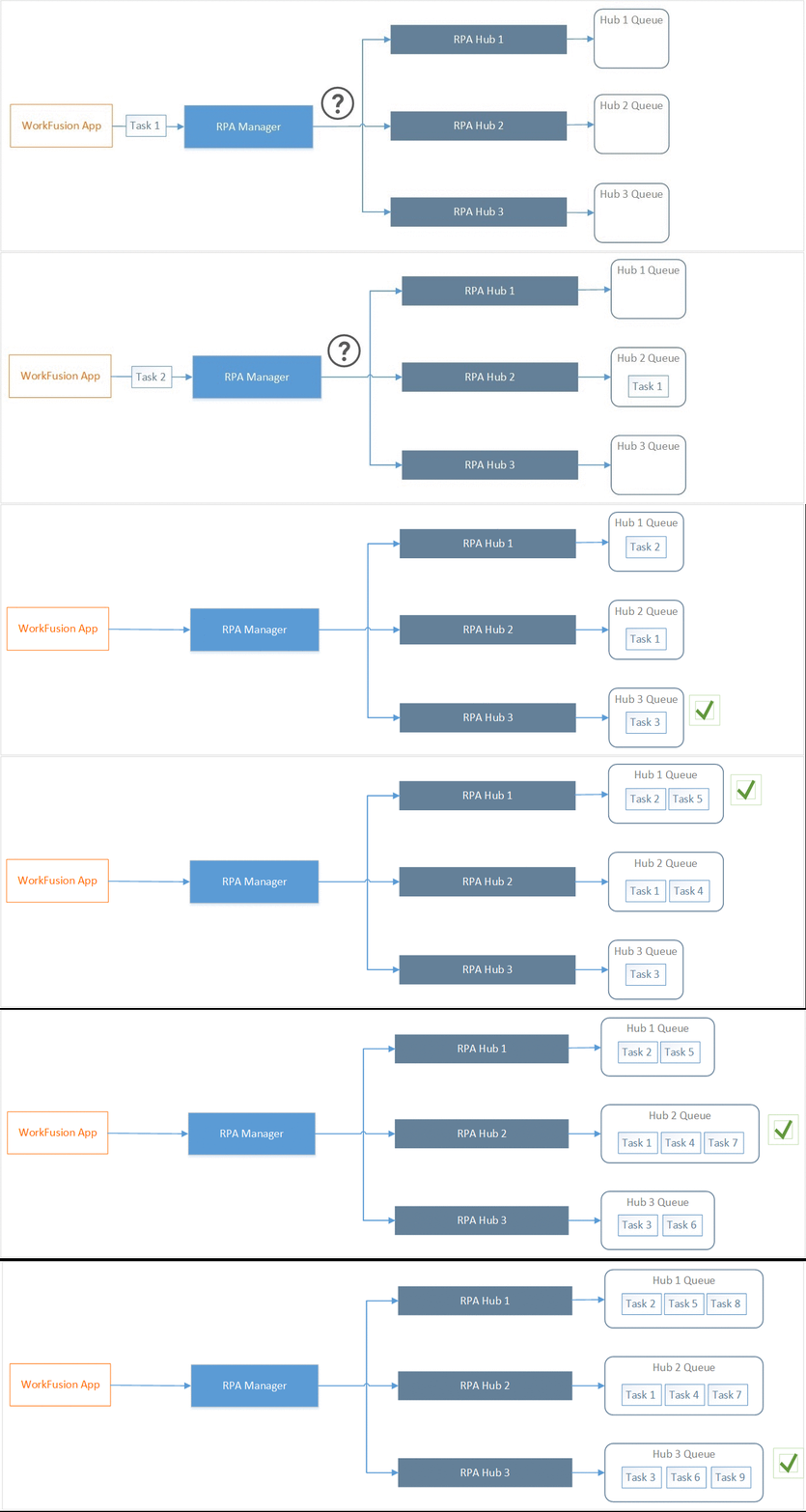
According to this strategy, when RPA Manager should distribute task, he or she selects hub with the earliest time of previous task distribution. Once new task is distributed on hub, time of task distribution is updated for this hub.
Cons:
- In case tasks have different instance duration, then hubs load is not taken into account. This can lead to queues on some of the hubs.
Pros:
- In case tasks have equal instance duration, then hubs will be loaded equally.
None of the strategies takes into account nodes capabilities.